


Dates & Prices |
BOOK NOW |
Dates: 11th – 14th June 2027 Confirmed departure
Price: £1,095 places available
Single Supplement: £95
Deposit: £150 per person
Price Includes: All meals, accommodation, local transport, services of the guides, evening talk, holiday report
Not Included: International travel, travel insurance, drinks & any other personal items
Conservation Donation: Norfolk Wildlife Trust
Leaders: Patrick Barkham & Kat Dahl
Group Size: Minimum of 4 and a maximum of 12 guests plus 1-2 leaders
Grade: Tracks, fens, and meadows on mostly level ground. A steady pace suitable for photography and options to stay nearer the vehicle if required.
Daily Walking: 3-5km
Holiday Highlights
- Seek out the beautiful British Swallowtail in its Broadland stronghold, with time to watch its behaviour and photograph it.
- Explore with Patrick Barkham, Norfolk naturalist and author of The Butterfly Isles
- Enjoy an electric ‘Swallowtail Safari’ boat trip through the quiet waterways of the Broads.
- Look beyond the adult butterfly, searching Milk Parsley for Swallowtail eggs and caterpillars.
- Discover Norfolk Hawker dragonflies, wetland flowers and birds such as Marsh Harrier, Bittern and Bearded Tit.
- Explore a selection of Broadland nature reserves at an unhurried pace, with time to enjoy the smaller details.
- Join Patrick for his evening talk, The Wonders of Butterflies, and a morning discovering moths in his own wildlife garden.
- Support Norfolk Wildlife Trust through a donation included in your holiday.
 Holiday Guide
Patrick Barkham is Natural History Writer for the Guardian and the author of The Butterfly Isles.
An enthusiastic amateur naturalist, Patrick was born in Norfolk and was educated at Cambridge University. He developed a passion for butterflies as an eight-year-old searching for the Brown Argus but only completed his boyhood mission in 2009, when he saw all 59 species of British butterfly in one summer and wrote a book about it.
His second book, Badgerlands, was hailed by Chris Packham as “a must read for all Britain’s naturalists”. His recent book, Coastlines, a history of coastal conservation, was praised by Blake Morrison as “an informative, enthusiastic and at times rapturous celebration of our shores”. His latest book, Islander, is about the human and non-human residents of Britain’s small isles.
He lives in the land of the Swallowtail with his three young children and is very proud of his four-year-old twins for being able to distinguish a Peacock from a Painted Lady at 100 yards. In 2012 he received The Marsh Christian Trust Award for the Promotion of Lepidoptera Conservation from Butterfly Conservation.
In search of the British Swallowtail A Swallowtail sailing above a Norfolk reedbed is a wonderful sight. Its yellow-and-black wings, blue markings and elegant tails make it unmistakable, yet finding one brings a particular excitement. This holiday gives us time to seek out these beautiful butterflies in the Broadland wetlands that are home to Britain’s resident population. We’ll visit a selection of promising sites, choosing our outings to suit the weather and seasonal conditions. There will be plenty of opportunities to pause where butterflies are active, watching their behaviour and hoping for a closer view as they settle to feed. Whether you are seeing your first Swallowtail or returning to photograph a favourite species, the emphasis is on enjoying the encounter. We’ll also look more closely at the butterfly’s life cycle. Among the fen vegetation grows Milk Parsley, the food plant of the British Swallowtail’s caterpillars. We’ll examine its feathery leaves for eggs and young larvae and, depending on the season, may find the larger, boldly patterned caterpillars too. These discoveries help reveal the connections between the butterfly and the habitat on which it depends. Explore Norfolk with Patrick Barkham Norfolk is home territory for Patrick Barkham, author of The Butterfly Isles, and his enthusiasm for its wildlife is an important part of this holiday. Together with co-leader Kat Dahl, he’ll help us discover the smaller details of the Broads as well as its more conspicuous inhabitants. Our days will be unhurried, with time to ask questions, take photographs and follow whatever catches our interest. Beginners are very welcome, as are experienced naturalists keen to spend longer with Broadland wildlife. Patrick will also give an evening talk, The Wonders of Butterflies, bringing another dimension to our days in the field. On our final morning, we’ll visit his own wildlife garden to discover the moths attracted overnight: a chance to appreciate their extraordinary variety of shapes, colours and patterns. The Broads on foot and by boat Big skies, rustling reeds and waterways fringed with lush vegetation give the Norfolk Broads a character all their own. Our excursions will introduce us to a varied landscape of open fen, wet meadows, woodland and pools, each offering something different to discover. We plan to explore Hickling Broad, How Hill and Strumpshaw Fen, alongside a specially arranged visit to Sutton Fen, subject to access and suitable conditions. Catfield Fen is another possible location. We’ll adapt our outings to the weather and wildlife, allowing time to linger when an encounter rewards closer attention. An electric ‘Swallowtail Safari’ boat trip offers another perspective. Moving quietly along the waterways brings us closer to the reedbed margins and gives us a chance to enjoy parts of the landscape that are less easily explored on foot. Dragonflies and reedbed birds Swallowtails are our main focus, but there is much more to enjoy. We’ll look for the distinctive green eyes of the Norfolk Hawker, alongside other dragonflies and damselflies such as Four-spotted Chaser and Banded Demoiselle. Birdsong provides a memorable accompaniment to our explorations. We may hear the deep boom of a Bittern, the sudden burst of a Cetti’s Warbler or a Cuckoo calling across the marshes. Marsh Harriers quarter the reedbeds, while careful watching may reveal Bearded Tits moving among the stems. A passing Kingfisher or a glimpse of an Otter would be a welcome bonus. Fen flowers and wetland plants The plants of the Broads deserve attention in their own right. Alongside Milk Parsley, we’ll look for species such as Greater Spearwort, Marsh Fern and Marsh-pea, and hope for an opportunity to see the rare Fen Orchid where access and seasonal conditions allow. The dykes and pools support another fascinating community, with plants such as Frogbit, Water Soldier and water-lilies. Taking time to explore this botanical variety helps us understand why these wetlands support so much wildlife, and why conserving their habitats matters.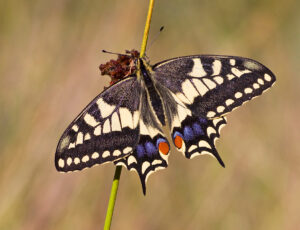


We’ll adapt our outings to the weather, seasonal conditions and recent wildlife sightings, making the most of opportunities to enjoy Swallowtails and the wider wildlife of the Broads. The following is our intended programme, with the order of visits subject to change.
Day 1 Arrival and our first Broadland wildlife
Meet at our hotel during the afternoon and settle in before joining Patrick and Kat for introductions and an outline of the weekend ahead.
If time and weather permit, we’ll head out for our first wildlife watching. This may be a gentle stroll beside the local waterways, listening for warblers and looking closely at the insects among the waterside vegetation. If conditions are particularly promising, we may venture a little further afield to begin our search for Swallowtails straight away.
We’ll return to the hotel for dinner together and a chance to get to know our fellow guests.
Day 2 Hickling Broad and How Hill
After breakfast, we’ll set out for Hickling Broad, where we’ll explore on foot and enjoy an electric boat trip through this extensive wetland reserve.
Our walk takes us past woodland, reedbeds and sheltered patches of flowers where Swallowtails may gather to feed. We’ll take our time wherever we find activity, watching the butterflies’ behaviour and enjoying opportunities for photography. There is plenty more to discover along the way, from moth caterpillars on brambles and nettles to dragonflies patrolling the dykes.
The boat trip brings a different perspective, taking us quietly along narrow channels between tall reedbeds and out onto open water. We’ll watch for Marsh Harriers, Great Crested Grebes and other wetland birds, with the possibility of Bittern, Bearded Tit or a passing Hobby. Depending on the route and conditions, stops at a boat-accessible hide and a lookout tower offer further opportunities to watch wildlife and appreciate the scale of the surrounding landscape.
We’ll enjoy a packed lunch before continuing our explorations at How Hill. Its meadows, woodland paths and network of dykes provide a lovely contrast to Hickling’s open expanses. Here we’ll look for more Swallowtails and enjoy the dragonflies and damselflies, including the distinctive green-eyed Norfolk Hawker.
Dinner will be at our hotel or a local restaurant.
Day 3 Strumpshaw Fen and Sutton Fen
Today we plan to explore Strumpshaw Fen, an RSPB reserve in the Yare Valley and a well-known site for Swallowtails.
We’ll search suitable nectaring spots before following paths and boardwalks through the reserve’s varied habitats. Where Milk Parsley grows, we’ll look carefully for Swallowtail eggs and, depending on the season, young caterpillars. Southern Marsh and Common Spotted Orchids, Marsh Pea and aromatic Bog Myrtle add botanical interest, while warblers call from the vegetation and Marsh Harriers hunt over the reeds.
After a packed lunch, we hope to enjoy a specially arranged guided visit to Sutton Fen, subject to access being confirmed and suitable ground conditions. This reserve is not normally open to the public, and visiting offers a valuable opportunity to discover its wildlife and learn about the management that maintains its rich fen habitats.
We’ll explore orchid-filled meadows and fenland paths, looking for Swallowtails feeding on Marsh Thistles and Norfolk Hawkers hunting nearby. We also hope to see the diminutive Fen Orchid and other wetland plants. The sense of space and quiet is part of the pleasure here, with broad skies above a landscape of fen, woodland and water.
We’ll return for our final dinner together, with time to share the weekend’s favourite encounters. During our stay, Patrick will also give his evening talk, The Wonders of Butterflies.
Day 4 Moths in Patrick’s wildlife garden
Weather permitting, our final morning takes us to Patrick’s own wildlife garden to discover the moths attracted to light overnight.
Patrick and Kat will help us identify the catch, with plenty of time to examine and photograph the moths’ remarkable colours, patterns and camouflage. Previous catches have included Elephant Hawk-moth, Eyed Hawk-moth and the wonderfully disguised Buff-tip, although every morning brings a different selection.
It is a relaxed and sociable way to conclude our weekend before departures between 11am and noon.
Please note that moth trapping depends on suitable overnight weather. Some fenland paths, particularly at Sutton Fen, can be wet, soft and uneven; we’ll provide advice on suitable footwear before the holiday.
-

- British Swallowtail on Flag Iris

-

- Photographing Swallowtail

-

- British Swallowtail on Marsh Thistle

-

- British Swallowtails

-

- British Swallowtail larva

-

- Photographing Swallowtail

-

- British Swallowtail

-

- British Swallowtail

-

- British Swallowtail larva

-

- British Swallowtails

-

- Banded Demoiselle

-

- Four-spotted Chaser

-

- Four-spotted Chaser

-

- Black-tailed Skimmer

-

- Four-spotted Chaser

-

- Norfolk Hawker

-

- Norfolk Hawker

-

- British Swallowtail on Black Knapweed

-

- British Swallowtail

-

- Information Board

-

- British Swallowtail on Sweet Rocket

-

- British Swallowtail

-

- Group

-

- Boat trip

-

- Norfolk Hawker

-

- British Swallowtail larva

-

- Boat trip

-

- Mute Swan and cygnets

-

- Photographing Swallowtail

-

- Boat trip

-

- Boat accessed hide

-

- Boat trip

Harriet P, 2026: “Wonderful short break in Norfolk. Fantastic views of swallowtails as well as lots of other insects, birds and plants, and the guides were amazing. Highly recommended.”
Karen G-M, 2026: “Well planned, expertly led, friendly small group and everything promised was delivered.”
Richard M, 2026: “The Greenwings ‘Swallowtail Weekend’ is an amazing opportunity to see this beautiful, but rare butterfly in all its glory, along with many other lepidoptera, dragon & damselflies, birds and mammals in this stunning part of the country.”
Malcolm and Vee W, 2025: “We learned so much from our very knowledgeable guides.”
Phil B, 2017: “This was my first experience with Greenwings after doing many trips with other companies. I was impressed with the ease of booking and communication between us and the office. I liked the relaxed attitude of Patrick, we weren’t being rushed from A to B, if we wanted to stay at one site a little longer then no problem. I also thought the idea of eating out of the hotel one evening was excellent, although the hotel food was pretty good.”
Swallowtail Weekend Trip Report 2026
Norfolk Swallowtail Weekend Holiday Report 2025
Norfolk Swallowtail Weekend Holiday Report 2024
Earlier reports available on request.