



Dates & Prices |
BOOK NOW |
Dates: 6th – 17th March 2027
Price: £4,495 Places available
Single Room Supplement: £495
Deposit: £500 per person
Price Includes: Accommodation, all meals, ground transport, services of guides, entry fees, holiday report
Not Included: International flights, travel insurance, drinks and any other personal items
Conservation Donation: Butterfly Conservation Europe & LepSoc
Leader(s): Steve Woodhall (+ Callan Cohen for larger group size)
Group Size & Travel: Minimum of 4 and a maximum of 12 guests plus 1-2 leaders
Grade: Generally short walks at a gentle pace and in a variety of terrains, ideally suited for photography
Holiday Highlights
- Explore with Steve Woodhall, butterfly expert, field-guide author and former president of LepSoc Africa, whose knowledge brings each encounter to life.
- Discover KwaZulu-Natal from four contrasting bases, exploring wooded savanna, inland scarp forest, coastal habitats and the distinctive sand forests of the Nibela Peninsula.
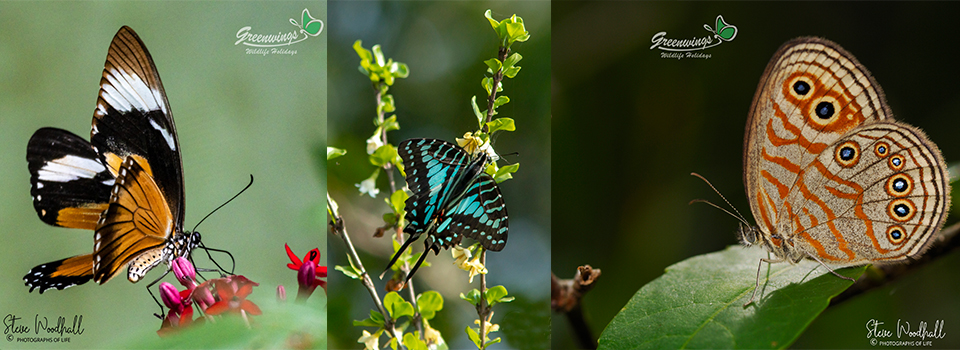
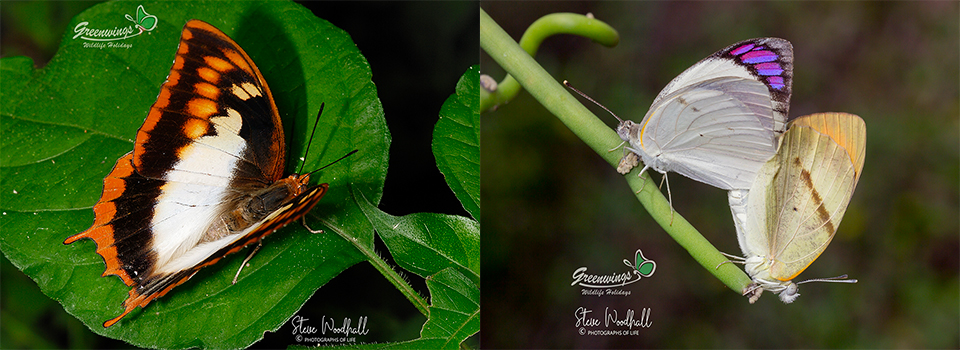
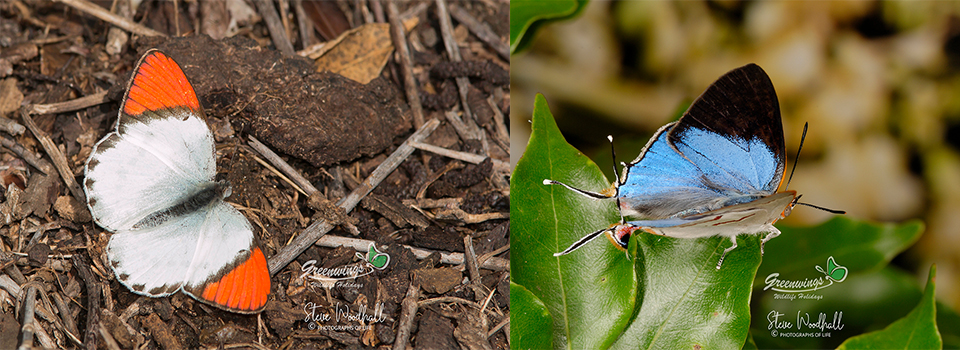
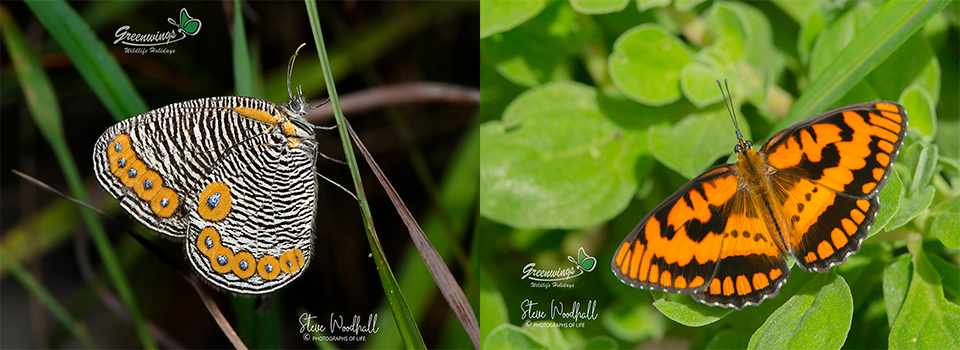
- Look for memorable butterflies including Gold-banded Forester, Mamba Swordtail, Natal Silverline, Large Glasswing and Boisduval’s False Acraea.
- Experience Dlinza Forest from its aerial boardwalk and woodland trails, gaining different perspectives on its butterflies and other wildlife.
- Enjoy generally short walks at a gentle pace, with time to watch behaviour, ask questions and take photographs.
- Share the experience in a small group of no more than 12 guests, with opportunities to learn together and enjoy each discovery.
- Appreciate the wider natural history, with birds, dragonflies and other wildlife adding interest throughout the holiday.
- Support butterfly conservation, with donations to LepSoc Africa and Butterfly Conservation Europe included in the holiday.
When one thinks of South African wildlife perhaps the first animals that spring to mind include iconic lions, elephants, giraffes, zebra, leopards or rhino. But what about the Blotched Leopard or the Beautiful Zebra Blue? South Africa is home to more than 670 species of butterfly! They are as diverse in size and colour as they are in number, from the smallest blues and coppers to the largest swallowtails and emperors. This tour offers the chance to get to grips with both the butterflies and some exciting wildlife. You don’t need to be a butterfly expert to enjoy this holiday Whether you are new to butterfly watching or have enjoyed it for years, there is plenty to discover. You don’t need to arrive knowing the names: curiosity and an enthusiasm for wildlife are a great starting point. With Steve’s guidance, we’ll learn what to look for, explore the differences between species and discover more about their behaviour and habitats. Our relaxed pace allows time to ask questions, revisit an identification and enjoy watching a butterfly simply for its beauty. More experienced enthusiasts will find plenty to interest them too, with opportunities to deepen their knowledge alongside others who share their passion. Our holiday will be based in the central-south part of Zululand. We will cover the forests, wooded savannas north of the Tugela River, around the famous wetlands at Lake St Lucia and False Bay, and inland along the adjacent escarpment. This area has most of South Africa’s tropical species and some of its largest butterflies. Staying in four different locations allows us to explore a rewarding variety of habitats, from wooded savanna and inland scarp forest to coastal forest and the sand forests of the Nibela Peninsula. Each base brings fresh opportunities to discover butterflies and other wildlife, with time to explore at a relaxed pace. Over the years, over 320 species have been recorded from this area. Late summer is the best time for many of them; it’s the beginning of the dry season and numbers should be close to their peak. Explore with one of South Africa’s foremost butterfly experts A particular pleasure of this holiday is exploring with Steve Woodhall, whose extensive field experience and books have helped others discover South Africa’s butterflies. His knowledge will help us find and identify species, understand their behaviour and habitats, and appreciate details we might otherwise overlook. There simply isn’t anyone better to show you the butterflies South Africa has to offer! The trips are jointly planned by Steve and Callan Cohen, one of South Africa’s leading birder and naturalist guides. Callan has led more than 200 bird, flora and wildlife tours, and often joins these tours to co-lead with Steve, depending on the group size and timings. Interested, but unsure whether this is the right holiday for you? Get in touch and we’ll happily talk through the walking, photography opportunities and travel arrangements. 


Holiday Itinerary — 6–17 March 2027
Our 12-day holiday explores KwaZulu-Natal from four bases: the Stanger and Tugela Mouth area, eShowe, St Lucia and the Nibela Peninsula. Each brings a different combination of habitats and wildlife, from wooded savanna and scarp forest to coastal wetlands and sand forest.
We will explore at a relaxed pace, with time to observe butterflies, enjoy other wildlife and take photographs. Steve will draw on his local knowledge to make the most of conditions throughout the holiday.
Day 0: International travel
Arrange your international flights to arrive at King Shaka International Airport by the morning of 6 March. Depending on your flight schedule, you may need to depart the previous day.
Days 1–2 (6–7 March): Arrival and the Tugela Mouth area
Two nights near Stanger
On arrival at King Shaka International Airport, we will meet and travel to our first base near Stanger. Our opening days introduce us to the rich butterfly habitats around Tugela Mouth, with the timing of our first outing depending on arrivals.
This area offers an inviting mixture of grassland, wooded savanna and lowland forest. Alongside its butterflies, we will take time to appreciate birds, dragonflies and other wildlife we encounter.
At Harold Johnson Nature Reserve, we will explore rewarding sites along easy paths through the reserve’s varied habitats. Its hilltops offer opportunities to look for butterflies such as Boisduval’s False Acraea, Forest Queen and Fig-tree Blue.
Nearby Fort Pearson is another productive butterfly site, particularly for smaller species including Brilliant Gem, Natal Silverline, Eastern Scarlet, Southern Sapphire and Red-line Sapphire. We will watch for activity around the hilltop, allowing time for close observation and photography. The site also adds historical interest: it played a role in the British invasion of Zululand in January 1879.
Days 3–5 (8–10 March): eShowe and the scarp forests
Three nights in eShowe
On 8 March, we will have a further opportunity to explore the Tugela Mouth area before travelling to eShowe, where we will settle in for three nights.
Our focus here is the rich scarp forest of Dlinza, a contrasting environment to the landscapes around our first base. The Dlinza Aerial Boardwalk offers a different perspective on forest life: its 150-metre elevated walkway passes through the understorey and leads to a 20-metre-high viewing tower.
Butterflies we will look for include Lesser Fig-tree Blue, Blue-spotted and Forest-king Charaxes, Blonde Glider, False Chief and Blotched Leopard. Exploring both the boardwalk and the trails below gives us opportunities to appreciate different levels of the forest and the wildlife associated with them.
Depending on weather and butterfly activity, we may also visit Mandawe Cross, an isolated hilltop in the rain shadow of the surrounding hills. Here we will look for Zulu Shadefly and colourful savanna butterflies such as Queen Purple Tip.
Another possible excursion is to a higher-altitude forest such as Nkandla Nature Reserve, around 60 kilometres from eShowe. Species of interest include White-banded Swallowtail, Rainforest Acraea and Karkloof Cupid.
We also plan to visit the eShowe Butterfly Dome, an educational site where locally indigenous butterflies are reared. Seeing their early stages adds another dimension to our understanding, while captive-bred adults can provide photographic opportunities with forest species that are often difficult to observe in the wild.
Days 6–8 (11–13 March): St Lucia and the coastal forests
Three nights in St Lucia
On 11 March, we will travel to St Lucia, visiting eNseleni Nature Reserve along the way. Its riverine forest, mangroves and moist grasslands provide fresh habitats to explore, with Jordan’s Sailer among the butterflies we will seek.
St Lucia lies at the southern edge of the iSimangaliso Wetland Park. The surrounding lowland forest and grassland create a different setting from eShowe’s inland scarp forests.
With two full days to explore after our arrival, we will visit forest sites in the vicinity and follow the best opportunities for butterfly watching. Species of interest include Gold-banded Forester, swordtails and related swallowtails, Millar’s Large Buff, sapphires and ciliate blues.
As throughout the holiday, we will make time for birds and other wildlife along the way, enjoying the wider natural history of this distinctive coastal landscape.
Days 9–11 (14–16 March): Nibela Peninsula and its sand forests
Three nights at Nibela Lake Lodge
On 14 March, we will travel to the Nibela Peninsula and settle into Nibela Lake Lodge, our final base.
The peninsula’s sand forests bring another change of habitat and opportunities to search for some characteristic Zululand butterflies. Gold-banded Forester, Shade Swallowtail, Mamba Swordtail, Zulu Yellow Buff and Large Glasswing are among the species we will look for.
We will have two full days to explore after our arrival, allowing time to revisit promising areas and respond to changing conditions. Steve will also be keeping an eye out for a male Light Ciliate Blue, a butterfly he is particularly keen to find here.
These final days give us time to enjoy the forest wildlife, develop our familiarity with the region’s butterflies and make the most of photographic opportunities before our journey home.
Day 12 (17 March): Departure
After our final night at Nibela Lake Lodge, we will return to King Shaka International Airport for onward flights.
A flexible approach
The itinerary may be adjusted in response to weather, seasonal variation, access or local conditions. Individual butterfly sightings cannot be guaranteed, and Steve will use his knowledge to select the most rewarding available sites throughout our stay.


 Steve Woodhall started butterfly & moth collecting in UK at the age of 5. He made the decision to go to Africa after seeing Born Free & finally made it (to South Africa) in 1980. He dabbled around before joining Lepidopterists’ Society of Africa in 1986. Steve spent the next 30 years running around Africa, collecting with net, traps and cameras.
More recently, entirely with cameras since the digital age, Steve has been to nearly every corner of South Africa and lots of places in Zimbabwe, as well as East and West Africa. He even found time to be the president of LepSoc for nearly 10 years! In addition, he began publishing with Practical Guide to Butterflies and Moths in Southern Africa as editor and contributor in 1992. He was co-author on Living Butterflies of Southern Africa in 1998 with Graham and Stephen Henning, and John Joannou. In 2005 he published Struik Nature’s ‘Field Guide to Butterflies of South Africa’, ‘What’s That Butterfly?’ in 2000, ‘Pocket Guide to Butterflies in South Africa’ in 2013, and ‘Gardening for Butterflies’ (with Lindsay Gray) in 2015. In 2025 he published ‘My First Book of Caterpillars’ with Struik Nature.
He is now training Nature Guides and has just published ‘Guiding Butterflies and Moths’, a textbook for students following the training programme of the Field Guides Association of South Africa (FGASA).
His App, Butterflies of South Africa, contains even more information than the books!
You can find out more about Steve at www.butterflygear.co.za
What our guests say
“An exceptional pairing of guides in Steve and Callan, both so knowledgeable about the natural history of the region and surrounding countries. Added to that, they are such lovely characters—helpful and tolerant to a fault. It was a genuine pleasure to travel with them!”
Dave C — 2017
“We had been wanting to travel to South Africa for more than 12 years. The fact that we could study butterflies in depth and also learn about the birds and other intriguing creatures of South Africa, plus experience Kruger National Park, made this an ideal trip for us!”
Dean & Sally J — 2017
Dean and Sally travelled on a slightly different itinerary that included Kruger National Park, led by the same guides, Steve Woodhall and Callan Cohen. Kruger is not included in the current KwaZulu-Natal itinerary.
“I had a most wonderful time. The group seemed to get on well and I appreciated Steve’s enthusiasm and expertise and that of Callan too. We were looked after splendidly. I thoroughly enjoyed all aspects of my visit and, of course, the butterflies were superb, but we were also able to learn about any South African wildlife we saw.
“Being my first experience of Africa, it was all very exciting and I am now home with many happy memories and telling folk about them.”
Pam
“Steve’s knowledge was incredible, but Callan was outstanding as a leader, organiser, general naturalist and all-round fixer!”
Tony