


Description
ake an extended tour of Greece with us to Crete & the Peloponnese. Timed to see the best of the Mediterranean autumn wildflowers and in some of the finest natural areas and historical locations this glorious country has to offer!
Autumn is a delightful time to visit with pleasant temperatures and plenty of sunshine. Crete has a typical mediterranean climate and spring, (as we know it in Britain) arrives with the autumn rains and subsequent flowering of the numerous bulbs on the island. Crete is one of Greece’s most botanically rich islands and we will spend a leisurely time looking for Crocuses, Colchicums, Cyclamen, Narcissus, Sternbergia and Scillas blooming, among others.
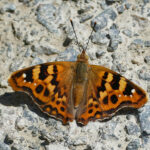
Unlike the cooler areas in Europe at this time of year, we can also expect to see at least a dozen species of butterfly on the wing, including a couple of endemics, Cretan Grayling and Cretan Argus. We may also note some interesting birds including Griffon Vultures, Red-billed Chough, Eleonora’s Falcons and Lammergeiers.
We start at Chania, situated in west of the island, between the White Mountains and the Cretan Sea. It is the most beautiful city in Crete and for some in the whole of Greece.
From Chania we’ll venture out to have a look at some of our first Cretan bulbs, like Crocus cartwrightianus, Crocus pumilus and Colchicum cupanii among other flora and fauna, at Falasarna and nearby areas. Later, we’ll take a stroll along the pretty Venetian harbour of Chania and dine in one of the many waterfront restaurants.
The White Mountains “Lefka Ori” and Omalos Plateau (1,000m above sea level) will be our next destination. Beautiful bulbs are expected here, like Colchicum pussilum and C. cretense, against the backdrop of some stunning views. The mountain is home to the endemic kri-kri or Agrimi (Cretan or Wild Goat) as well as Griffon and Bearded Vulture.
We will also visit the Omalos Plain at the top of the Samaria Gorge to see Colchicum cretense, Colchicum macrophyllum and also look for some of the rarer Crocuses such as Crocus cartwrightianus and Crocus oreocreticus. We should also see Allium callimischon, Sternbergia lutea and other bulbs here.
A drive through the eastern foothills of Lefka Ori will take usdown to the south of the island, through the impressive Topolia Gorge, an impressive 1.5 km long, very narrow and deep gorge, full of smaller and bigger caves. We will visit one of them, the Agia Sophia cave, with a small chapel inside! We will also visit the Palaeochora area in SW Crete for bulbs, like Crocus oreocreticus and Colchicum macrophyllum as well as Biarum davisii, Allium callimischon, Sternbergia lutea and others.
At the Akrotiri Peninsula we will visit two remarkable Orthodox monasteries-castles and botanize in the surrounding rocky terrain and the fantastic natural scenery of Katholiko Gorge. From here we also transfer to our second base to a charming and historical village in central Crete.
Another day we’ll explore Spili and the famous meadows above it, as well as Kourtaliotis gorge and Preveli monastery. We will visit the Palm Forest of Agios Nikitas for the famous & endemic Cretan Palm Phoenix theophrasti. We will also see many bulbs, such as Cyclamen graecum, Prospero autumnalis and Narcissus obsoletus.
Mount Psiloritis, at 2.456m, is the highest mountain in Crete draws everyone gaze to its imposing mass and that will include us! As well as botanising it, we will aim to reach the high altitude, where the famous Nida plateau lies and Idaion Antron cave, the birthplace of Zeus.
Crete is as rich in history as it is in nature and myth. One can’t visit the island without seeing Knossos, the oldest city in Europe and centre of the Minoan civilization. We will visit the monumental Palace of Minos, with its association with the Greek myth of Theseus and the minotaur. And then continue with bulb-hunting at Mt Giouchtas, a small mountain that hosts its own share of bulbs and beauties, like Crocus tournefortii and Colchicum balansae.
Our adventure contunues on the mainland, where upon arrival in Athens we’ll head west and across the Corinthian Canal to the Peloponnese Peninsula.
Southern Greece and the Peloponnese peninsula have a typical Mediterranean climate with mild, wet winters and hot dry summers. Spring really starts in the autumn with the coming of the rains; the first plants to flower are the many bulbs of the area. Our holiday has been timed to see the best of the Mediterranean autumn wildflowers in some of the best areas in the Peloponnese, Tayetos and Mani. Tayetos, the highest mountain in the Peloponnese, features a fascinating flora. We can expect to explore up to around 1800m to enjoy the range of flowers and mix of evergreen and deciduous forests. The Mani peninsula supports a diverse range of flowers too.
On this tour we can expect to see Colchicum, Cyclamen, Sternbergia, several species of Crocus, a Galanthus and possibly a Biarum as well. The focus of the holiday will be on finding and photographing the plants and enjoying the other natural history in this beautiful autumn landscape, as well as soaking up the local culture. We shall take in a number of archaeological areas, such as the Treasury of Atreus, (possibly Epidauros) and Mystras, the magnificent Byzantine city on the slopes of the Tayetos and smaller Byzantine churches that we come across. We shall also visit the Mani to see the fortified towers.
The Peloponnese is a peninsula that covers an area of some 21,549.6 square kilometres and constitutes the southernmost part of mainland Greece. It is connected to the mainland by the narrow Isthmus of Corinth. It is said to derive its name, Peloponnesos, or the island of Pelops, from the mythical King of the region.
The area is also steeped in history; this is the land of Mycenae, Sparta and Olympia; the Greek war of independence started here in 1821. The Mycenaean civilization, mainland Greece’s first major civilization, dominated the Peloponnese in the Bronze Age from its stronghold at Mycenae in the north-east of the peninsula.
Central Peloponissos is dominated by Mt Menalos and in the south are two long mountain ranges, the Tayetos and the Parnonas. It is a very diverse area encompassing high snow-capped mountains with extensive woods, rocky scrub, gorges and wetlands. The southern part of the Tayetos is known as the Mani peninsula, a rugged, barren place, home to high towers and feuding Greeks, wonderfully described by Patrick Leigh Fermor in his book ‘Mani’. He writes ‘There is hardly a rock or a stream without a battle or a myth, a miracle or a peasant anecdote or a superstition’
It is also possible to do each tour separately, here are links to to the individual pages for Crete and The Peloponnese.




Reviews
There are no reviews yet.