



Dates & Prices |
BOOK NOW |
Dates: 24th November – 6th December 2027
Price: £3,975 Places available
Single Room Supplement: £395
Deposit: £400 per person
Price Includes: All meals, accommodation with private facilities, ground transport, services of the guides & holiday report
Not Included: Flights, travel insurance, drinks and any other personal items
Conservation Donation: BSBI
Leaders: Frank Gaude & Alice Hunter
Languages: Guiding in English plus German
Group Size: Minimum of 4 and a maximum of 9 guests plus 1-2 leaders
Holiday Highlights
- Explore the Cape Floral Kingdom, home to over 9,000 plant species!
- High diversity of South African orchids
- Unique Fynbos Flora of the winter-rainfall areas of SA, including the national flower, the King Protea (Protea cynaroides)
- Focus on the amazing orchids including the extraordinary variety found from the Disa genus
- Showy and diverse landscape of the Cape Fold Mountains and the Garden Route
- Cape Peninsula Tour including Cape of Good Hope and African Penguin colony
- Visit to Table Mountain, one of the new 7 wonders of nature
- Spectacular Mountain Passes (Montagu and Swartberg Passes)
- Visit a number of locations to search for orchids, including Table Mountain National Park, Cape of Good Hope, Cape Point, Garden Route & Klein Karoo
- A great time to escape winter in Northern Europe and just before the Christmas season too!
- Please be aware that this is a reasonably intensive tour, aiming to see as many of the iconic orchid species as possible, and therefore some long drives are necessary, including some on unmade roads
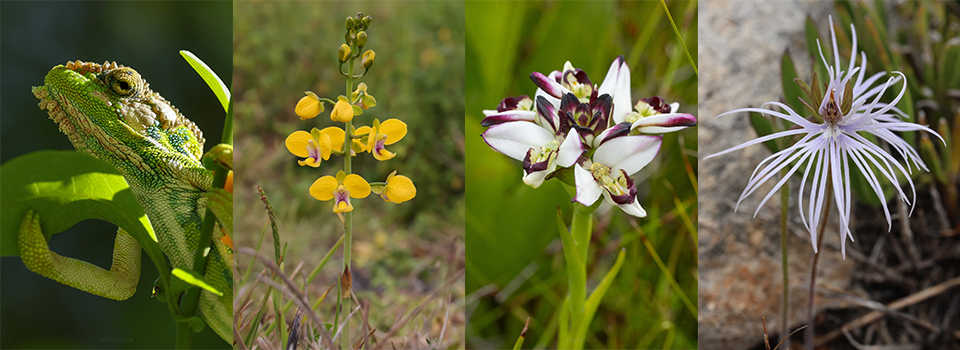
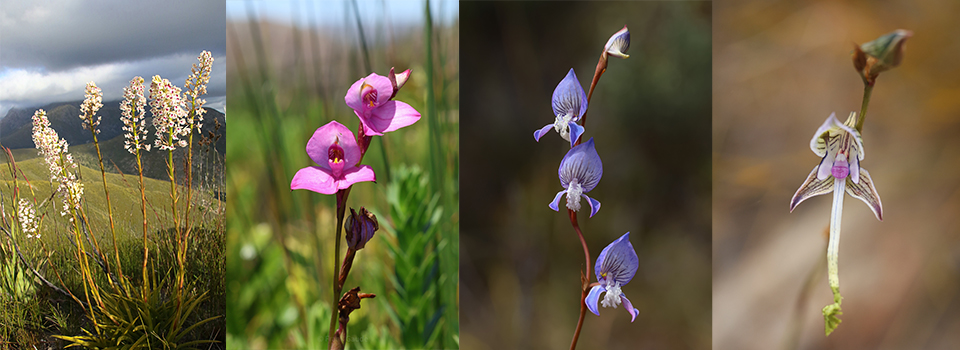
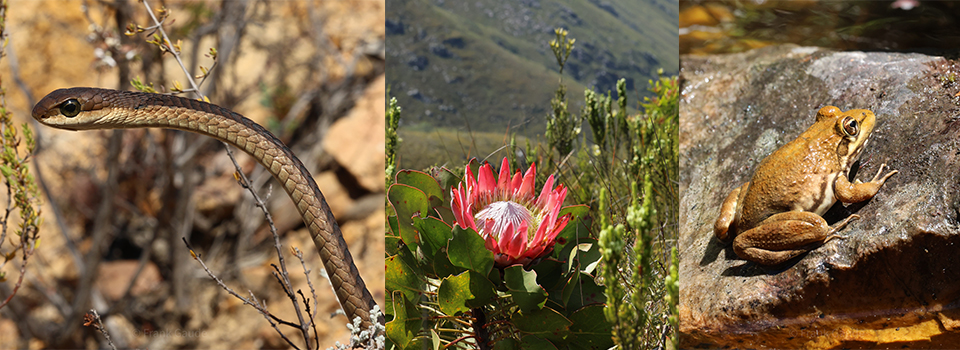
The Cape Floristic Region of South Africa, also referred to as the Cape Floral Kingdom, is an area of extraordinarily high diversity and endemism and is home to over 9,000 vascular plant species. This biodiversity is associated with fynbos, a winter-rainfall biome of generally shrubby appearance. Fire forms an integral part in the lifecycle of Fynbos and clears areas every 10 to 20 years of senescent plants, stimulating the resprouting and germination of new growth and the flowering of orchids and bulbs that may have been biding their time hidden under larger plants. On this trip we will visit spectacular areas within the Fynbos biome, some of which are well-known tourist attractions commonly associated with beautiful scenery, such as Table Mountain, the Garden Route, the Klein Karoo, the Overberg and the Kogelberg. The scenery itself is worth this trip, but of course we will be scouting the area for its smaller natural treasures, predominantly the orchids and many other indigenous flowering plants the Fynbos is known for, such as Proteas, Ericas and many bulbous plants, chiefly members of the Iridaceae. Home to the Fynbos is a set of extraordinary orchids belonging to several genera, the most famous being the genus Disa, prominently represented by the well-known Red Disa (Disa uniflora). The genus comprises about 180 species indigenous to tropical and southern Africa, with a few more in the Arabian Peninsula, Madagascar and Réunion. A large number occur in a small area in the Western Cape of South Africa; some are common whilst others are rare and their appearance often depends on fire. Their habitat is very varied and can comprise a wide variety from sea level to mountain top. Each species of Disa usually has a single species as pollinator, and they employ a large range of pollinators from moths to sunbirds. Our aim during this holiday is to see the more reliable species such as Disa cornuta, D. purpurascens and D. tenuifolia, but also look for the rarer and fire-dependent species such as Disa atricapilla and D. bivalvata. We hope to see some early-flowering specimens of the iconic Red Disa (Disa uniflora), too. Eulophia is another genus of the orchids we shall look for in coastal sands and fynbos. Due to their minute flowers, some may need closer inspection for appreciation, such as Eulophia cochlearis, E. lamellata, E. tristis, whilst others such as Eulophia lunata and E. speciosa are larger and quite spectacular to look at. The two orchid species referred to as ‘Spider Orchids’, previously known as Bartholina, have recently sunk with the genus Holothrix. We will attempt to find both of these special species at previously successful locations. There will be many others too, such as members of the genus Satyrium and even a few epiphytic orchid species. By and large, the itinerary has been devised with as many showy and reasonably reliably flowering species in mind that are not heavily dependent on fire. However, since many species do depend on fire for flowering, we shall keep the itinerary somewhat flexible to allow us to visit areas that have recently burned. Weather: Akin to summer in a Mediterranean climate; temperatures possibly between 15 degrees at night and well into the 30s during the day. Some precipitation is possible and light rain gear might be a good idea. Passport requirements: Please ensure you have at least 2 – 3 blank pages in your passport as you will be denied entry to South Africa unless you have 1 blank page. UK passport holders do not need a visa to enter South Africa but if you are traveling on the passport of another country then please check the requirements. Health and fitness: Regular hikers /walkers won’t find this tour demanding, but some level of basic fitness is required for some of the walks. We will allow for plenty of time for steep sections and we will only do fairly short walks of up to 6km, but we will spend lots of time in the open where shade may not always be available and temperatures may reach 30+ degrees. Please be aware that this is a reasonably intensive tour, aiming to see as many of the iconic orchid species as possible, and therefore some long drives are necessary, including some on unmade roads. Travel: For the duration of the tour we will use a comfortable and air conditioned 14-seater minibus with a separate locked luggage trailer, meaning ample space for all guests. Languages: The guides are native and/or fluent speakers in English and German. This is a fantastic tour – we recommend booking early to avoid disappointment!
Additionally, amongst the tour leaders is a great interest in the mammals, birds, reptiles, amphibians and arthropods of the Fynbos, which we won’t ignore if encountered. The focus of this tour is, however, on the various orchid species.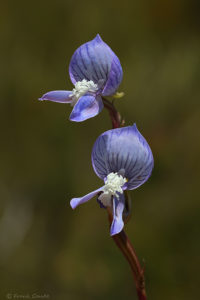


Day 0, 23rd November:
Overnight flight from London for UK-based guests.
Day 1, 24th November:
Transfer from Cape Town Airport to our accommodation in Cape Town
If time permits, we will take a walk in a local nature reserve to attempt to find three Eulophia species, Eulophia tristis, Eulophia lamellata and the intriguing ‘Upside-down’ Eulophia, E.bolusii. Depending on recent fires, we may see many more orchid species than these. We will not only look out for orchids, but also the other fynbos plants of the area, such as the ‘Mountain Dahlia’ (Liparia splendens).
Day 2, 25 November:
Cape Peninsula Tour
This day consists mostly of the classic Cape Peninsula Tour, which includes a visit to the African Penguin colony at Boulders Beach. From the penguins, we continue to Cape Point Nature Reserve where we will attempt to find the beautiful Disa purpurascens amongst other interesting plants and animals like Cape Snow or White Everlasting (Syncarpha vestita), Chacma Baboons (Papio ursinus), the Bontebok (Damaliscus pygargus pygargus) and the more common bird and reptile species.
We will make time for the obligatory photograph at the Cape of Good Hope before we return to Cape Town via the scenic Chapman’s Peak Drive.
Day 3, 26 November:
Cape Town – Ceres, travel distance ca 150 km
We leave Cape Town and drive northeast to head for a scenic mountain pass where we will look for orchids and other interesting plants. The flowers on this beautiful mountain pass are particularly interesting after fires, but there are some orchid species that flower fairly reliably, such as the Lilac Disa (Disa harveyana) and the Stream Disa (Disa uncinata).
After we have had lunch en route amongst the beautiful mountainous landscape, we will continue to the town of Ceres where we will spend the night. If the remaining time allows, we may explore nearby locations where we might find the Cederberg Dragaina Disa (Disa harveyana longicalcarata) and other interesting species.
Day 4, 27 November:
Excursion around Ceres and transfer to the Swartberg Mountains via the Klein Karoo (ca 380km)
We will do an early morning walk to find more orchids. Possible species include the beautiful, small Disa caulescens, furthermore Disa cornuta, Disa multifida and Disa racemosa amongst others.
Later we will embark on a long drive to our next destination, the Swartberg Mountains, ca 300 km east as the crow flies.
We will travel through the Klein Karoo, a semi-arid area enclosed by two parallel mountain ranges. If there is interest (there usually is), we will visit Hildegard Crous in her orchid nursery ‘Disa House’. Hildegard Crous is an authority on orchid cultivation and curated the Kirstenbosch collection in Cape Town before she started her own nursery in Barrydale. We will learn about the growing conditions needed by these plants, which will make us understand better how these seemingly fragile plants survive under often harsh habitat conditions.
Day 5, 28 November:
Swartberg Pass excursion
From our accommodation, we will drive up the well-known Swartberg Pass, probably the most famous pass road in South Africa, known for both its scenic splendour as well as its adventurous, untarred road. The mountains along this pass are the highlight of the day, since they are at the convergence of three South African biomes and hence very species-rich. Succulent Karoo, Nama Karoo and Fynbos all contribute to the diversity of this area, and we will use as much of the day as we can to explore its natural splendour.
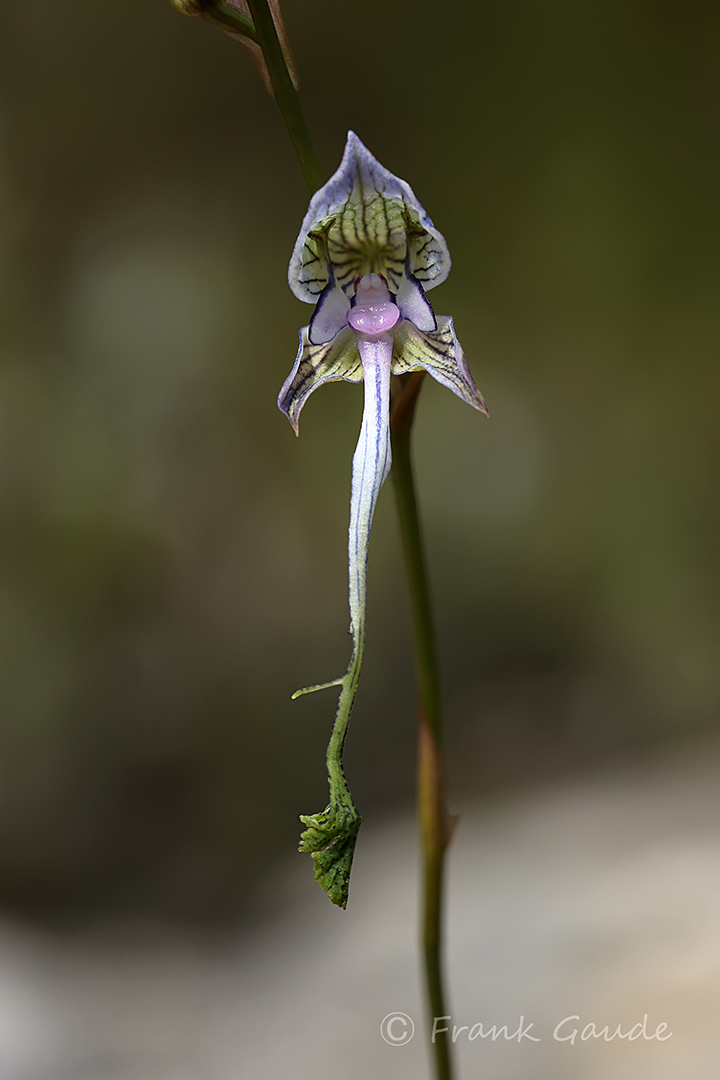
Although we will be on the lookout for any flowering plants in this area, we are going to focus on orchids, especially the unusual Disa multifida with its extraordinarily long lip and the equally exciting Spider Orchid Holothrix burmanniana. Other orchid species that we may discover are Eulophia tristis, Disa filicornis, Disa bolusiana, Holothrix brevipetala and Satyrium acuminatum and S. eurycalcaratum.
There will be a multitude of other plant species from the family of the Iridaceae, Proteaceae, Ericaceae and several species of Pelargonium, some of which are endemic to this area. With a bit of luck, we may also see the agile Klipspringers (Oreotragus oreotragus), a small species of antelope well adapted to living in mountainous terrain, or the local troop of Baboons.
Day 6, 29 November:
From Swartberg to the Outeniqua Mountains (ca 90 km)
We continue our journey and drive south to the next mountain range, the Outeniqua Mountains, where we check into a cosy, family-run guest farm where we will stay the night.
The rest of the day is spent exploring the nearby Mountain Fynbos of the surrounding Outeniqua Mountains from hiking trails and pass roads of the Cape Fold Mountains. We hope to find the following orchids: Brachycorythis macowaniana, Ceratandra globosa, C. grandiflora, Disa cylindrica, D. hians, D. reticulata, D. sagittalis, Habenaria lithophila and the second Spider Orchid, Holothrix etheliae.
Of course we won’t restrict ourselves to the local orchids, but will also be on the lookout for other plants of interest, such as the famous King Protea (Protea cynaroides), the national flower of South Africa.
Day 7, 30 November:
From the Outeniqua Mountains to the Garden Route (ca 100 km)
From our accommodation, we will drive towards the southern, green side of the Outeniqua Mountains to the town of Wilderness, where we will visit a section of the Garden Route National Park, and embark on a hike through dense Afro-temperate forest growing on the mountain slopes and along river courses.
The orchids in this forest are mainly of epiphytic (tree-dwelling) adaptation, such as Mystacidium capense, Cyrtorchis arcuata and Tridactyle bicaudata bicaudata. With some luck we may find a late-flowering specimen of Bonatea speciosa. The forest also holds other interesting plant and bird species to look out for.
We will explore further forest and littoral areas in search of other species such as the large and showy Eulophia speciosa.
We will spend two nights on the Garden Route.
Day 8, 1 December:
Searching for terrestrial orchids on the coastal Garden Route
Today we will travel eastwards along the coast. Since the Garden Route is an area that experiences year-round rainfall, we can find some overlap with species which are commonly associated with the summer-rainfall areas of South Africa, such as the sunbird-pollinated, orange spikes of Disa chrysostachya, the dainty Wolfbane Disa (Disa aconitoides) and spikes of the variable Disa hians in shades from white to blue. We also hope to see tiny Eulophia aculeata and E. cochlearis and maybe a few late-flowering Ceratandra globosa.
Day 9, 2 December:
Garden Route – Napier (ca 350 km)
Today is a day when we will be predominantly on the road, travelling from the Garden Route to the area known as the Overberg. We may break up the long drive with photo stops at suitable locations.
In the Overberg most of the nutrient-rich ground has been converted to one of the most important wheat and rapeseed growing areas of the country. Some pockets of natural growth are nowadays protected and often enjoy the status of a public or private nature reserve.
Day 10, 3 December:
Overberg to Overstrand (ca 80 km)
We keep the exact content of this day’s excursion open, so that depending on previous rainfall and fires we may alter our route to best suit our interest. We may very likely visit a reserve close to the town of Napier, where the very beautiful Disa venusta and also Disa filicornis occur.
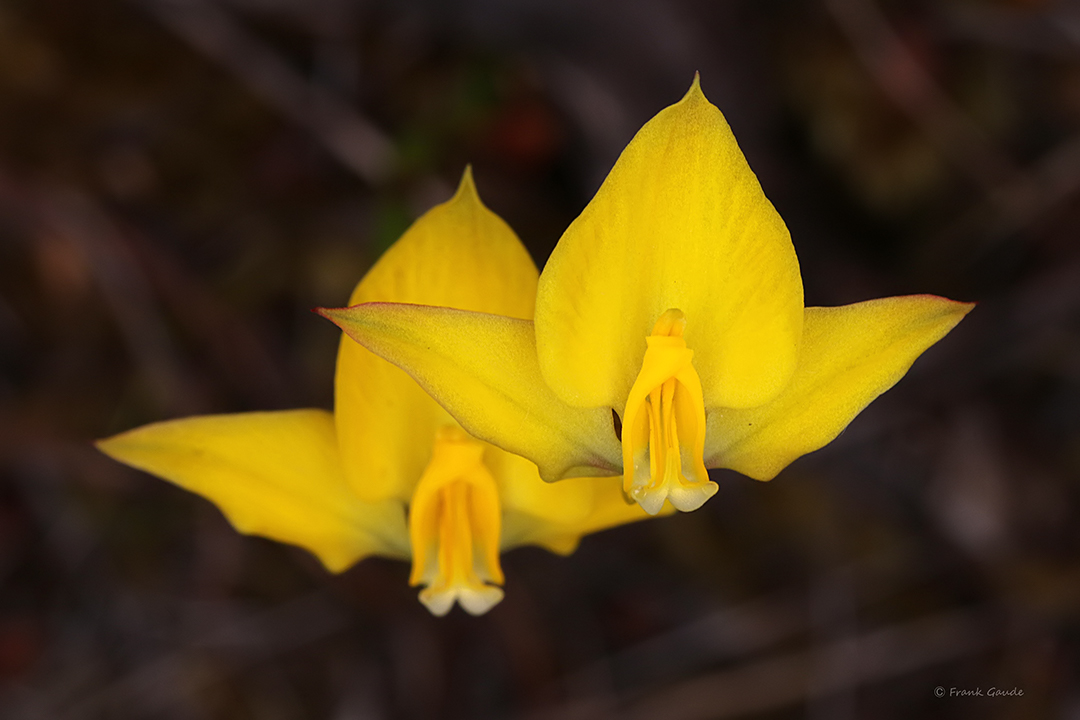
As we approach the coast, known as the Overstrand, we will check some locations for the beautiful orchid Orthochilus litoralis, as this is visually a very different and pleasing species with acid-yellow flowers.
We will stay at a hotel in Hermanus.
Day 11, 4 December:
Hermanus to Cape Town (ca 150 km)
Today we drive to Cape Town, but there are many places to visit en route. We may visit Kogelberg Nature Reserve, one of the most species-rich areas of the Western Cape. Whilst a visit to this reserve may not yield too many orchid species at this time of year unless there has been a fire the year before, we can still not ignore it due to its general biodiversity, and there are many other lovely flowering plants to enjoy.
This is also a hotspot for Damsel- and Dragonflies (Odonata). Smaller animals include Angulate Tortoise (Chersina angulata), Cape River Frog (Amietia fuscigula) and Clicking Stream Frog (Strongylopus grayii), and we may hear and see the local Baboon troop.
As we continue our way along the False Bay coast, we will look for one of the most conspicuous Satyrium species in the Western Cape, Satyrium hallackii hallackii.
In Betty’s Bay we can visit the local Botanical Garden and also an African Penguin colony if time allows.
We continue our journey back to Cape Town on Clarence Drive, one of the most spectacular coastal drives in South Africa.
Day 12, 5 December:
Table Mountain Plateau Walk
Most of this day we will spend on iconic Table Mountain, one of the places with the highest biodiversity in South Africa, despite being surrounded by a metropolis of over 5 million inhabitants.
We will make use of the Cable Car to reach the plateau at ca. 1070 masl and from there start our walk on top of Table Mountain and the area known as the ‘Back Table’.
No particular mountaineering skills are required, but it will be a long day spent on the mountain, and ideally we will walk into and out of gorges on the mountain, so some elevation will be involved, which requires some fitness and good hiking shoes.
The most spectacular orchid species that we will search for today is the ‘Drip Disa’ (Disa longicornu). In its company we should find some other Disa species as well, such as Disa cornuta, D.glandulosa, D. harveyana, D. ocellata, D.tenuifolia and D. vaginata and also Evotella carnosa.
Many other plant species will be in flower, such as members of the Proteaceae, Ericaceae, Gladioli, Crassula and many more. We may see interesting bird species such as Cape Sugar Birds (Promerops cafer) and Orange-Breasted Sunbirds (Anthobaphes violacea). Many red-flowering plants attract the Table Mountain beauty (Aeropetes tulbaghia), although they require some skill to photograph. Interesting, frequently seen reptiles include the Black Girdled Lizard (Cordylus niger), Southern Rock Agama (Agama atra) and the Cape Crag Lizard (Pseudocordylus microlepidotus microlepidotus). The reintroduced Klipspringers (Oreotragus oreotragus) are making a comeback on Table Mountain, so we will have to keep an eye out for them, too.
Day 13, 6th December:
The end of our tour and transfer to Cape Town International Airport.
-
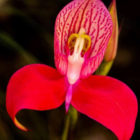
- Disa uniflora
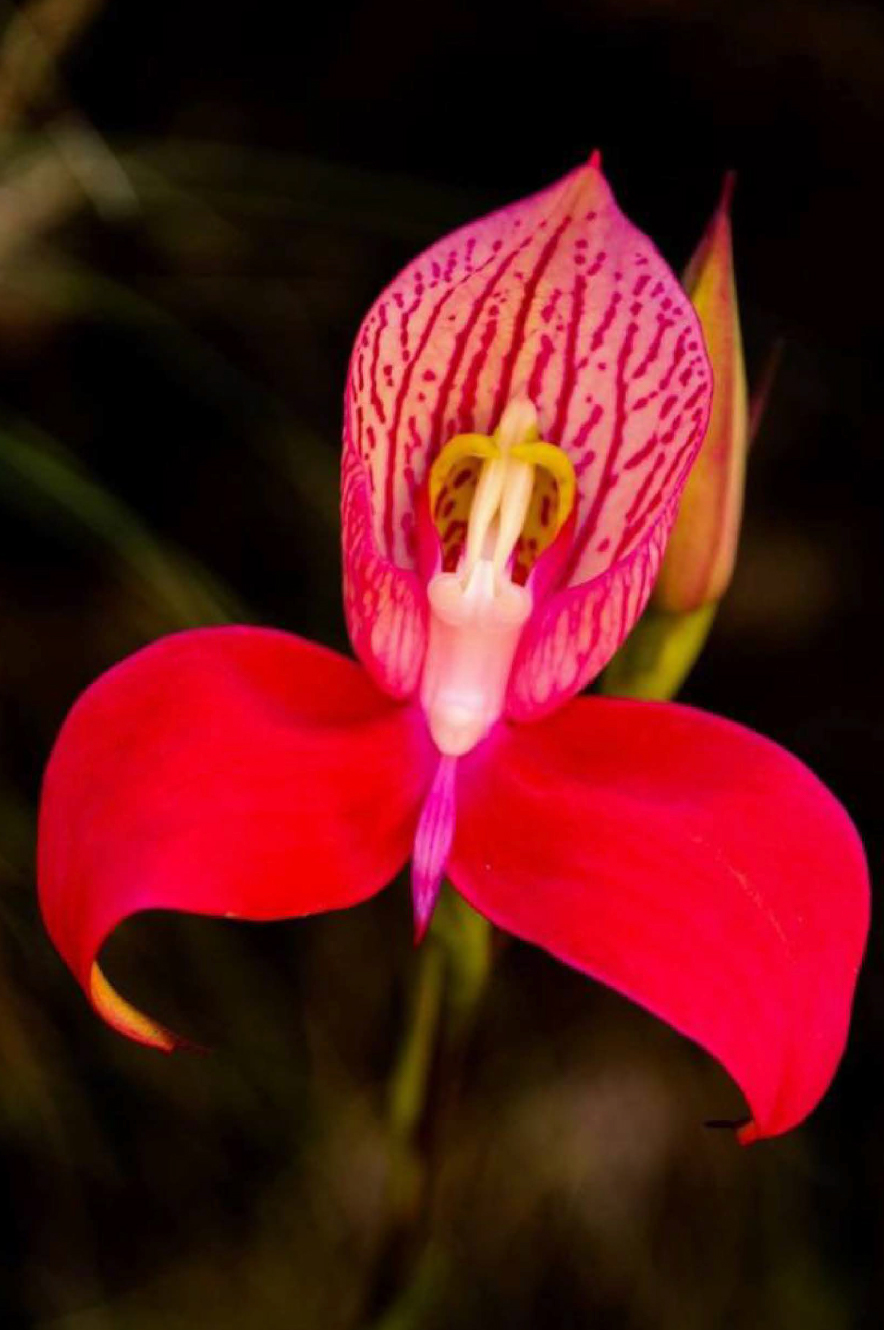
-
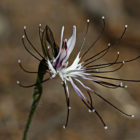
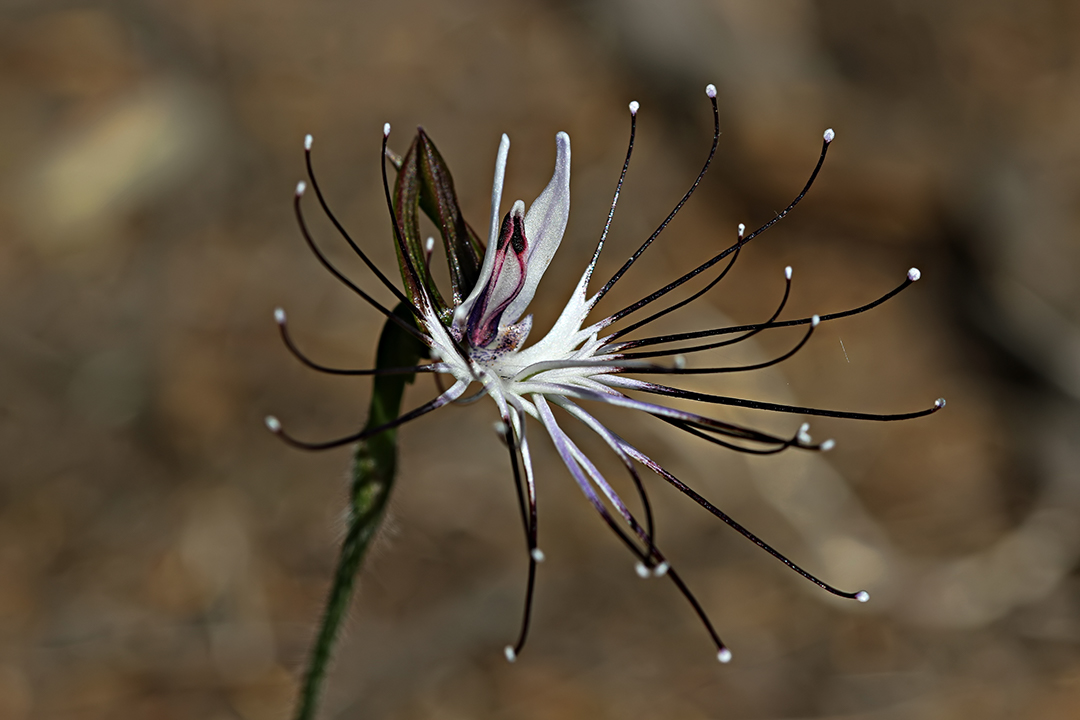
- Holothrix etheliae
-
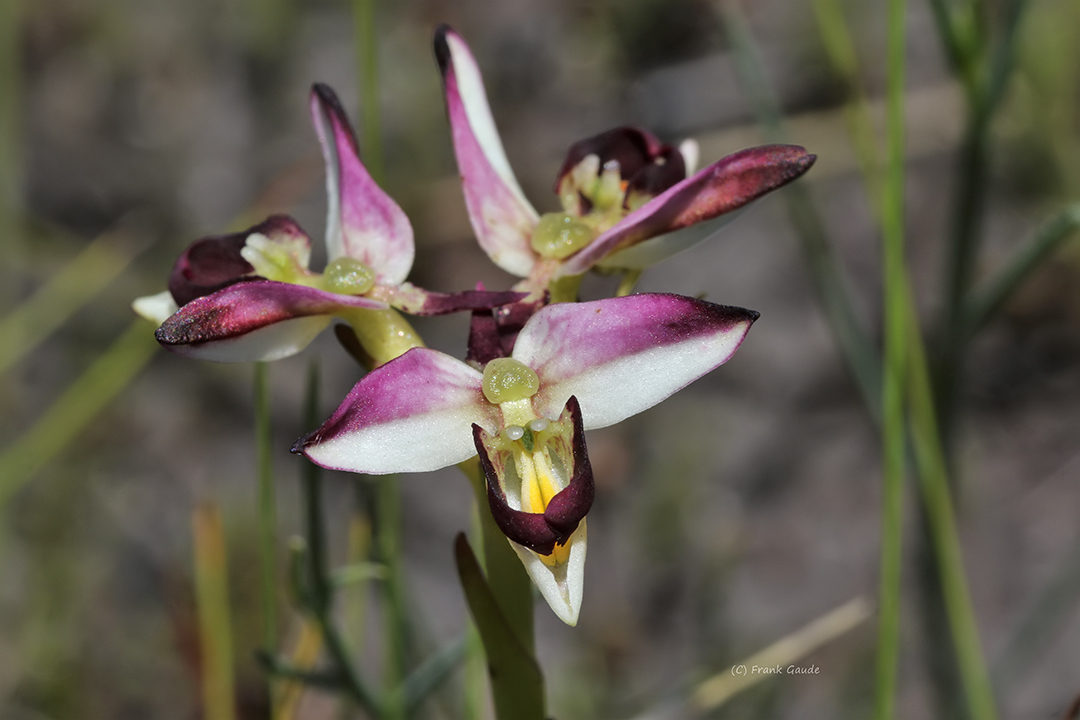
- Disa atricapilla x bivalvata
-
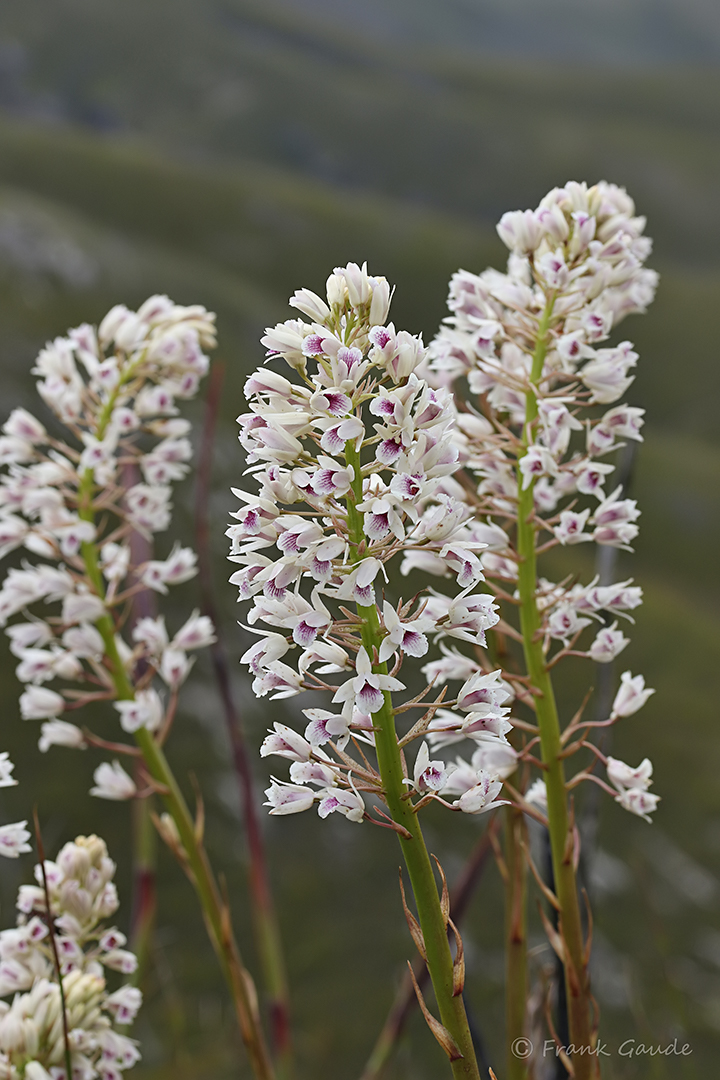
- Eulophia barbata
-
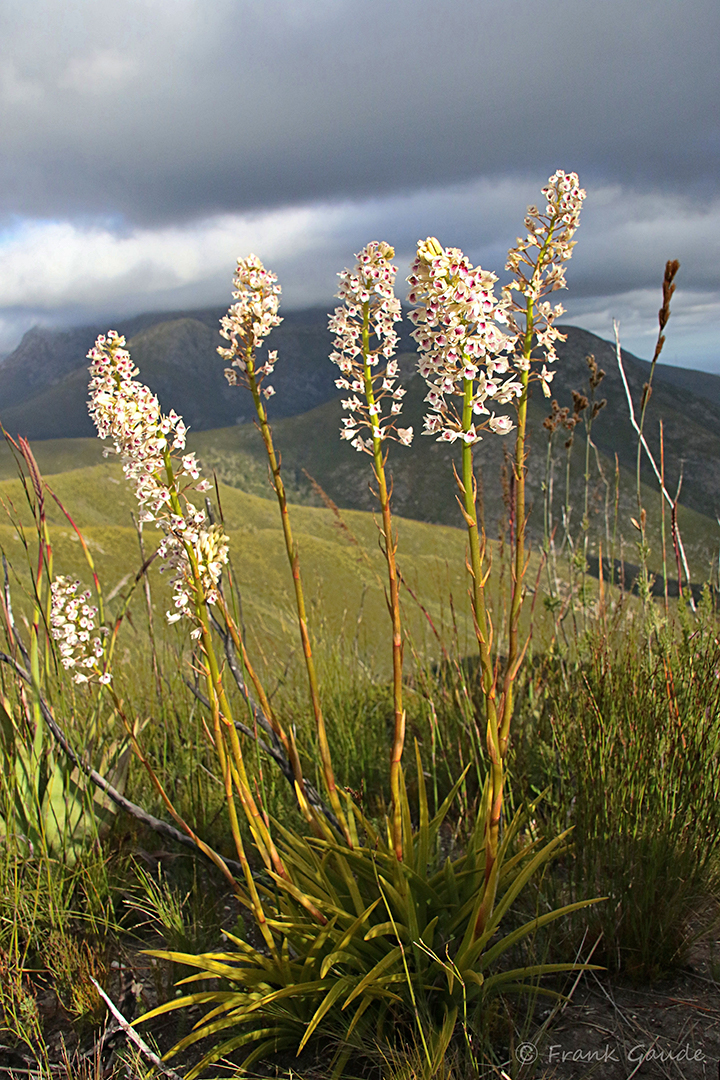
- Eulophia barbata
-
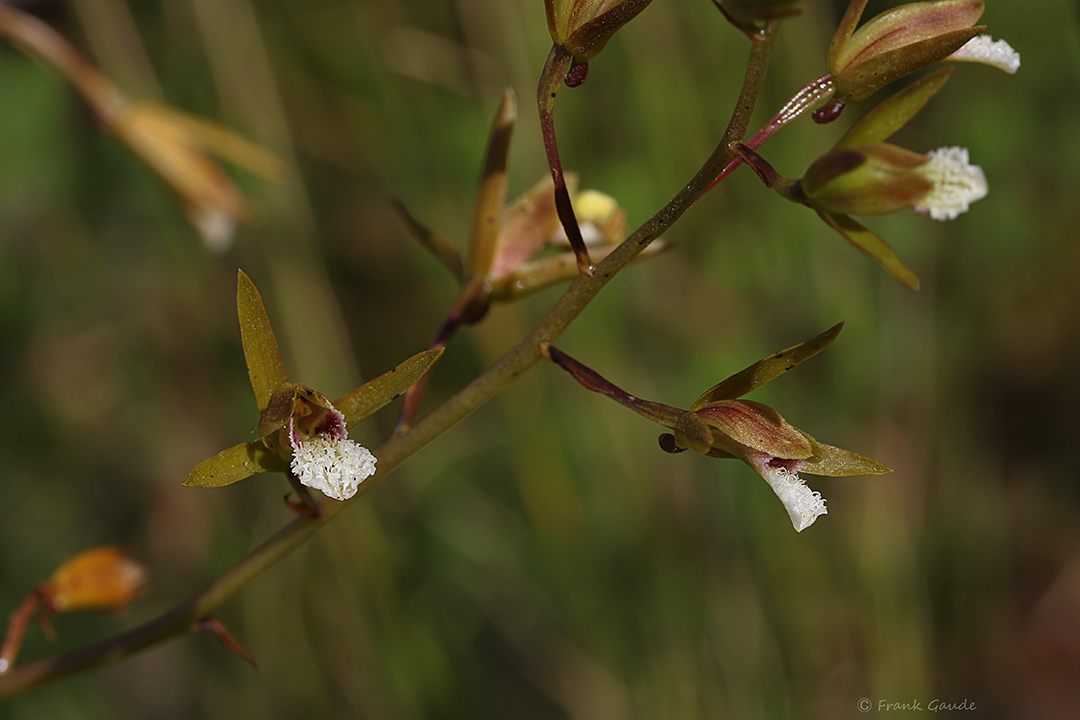
- Eulophia tristis
-
- Dilatris viscosa

-
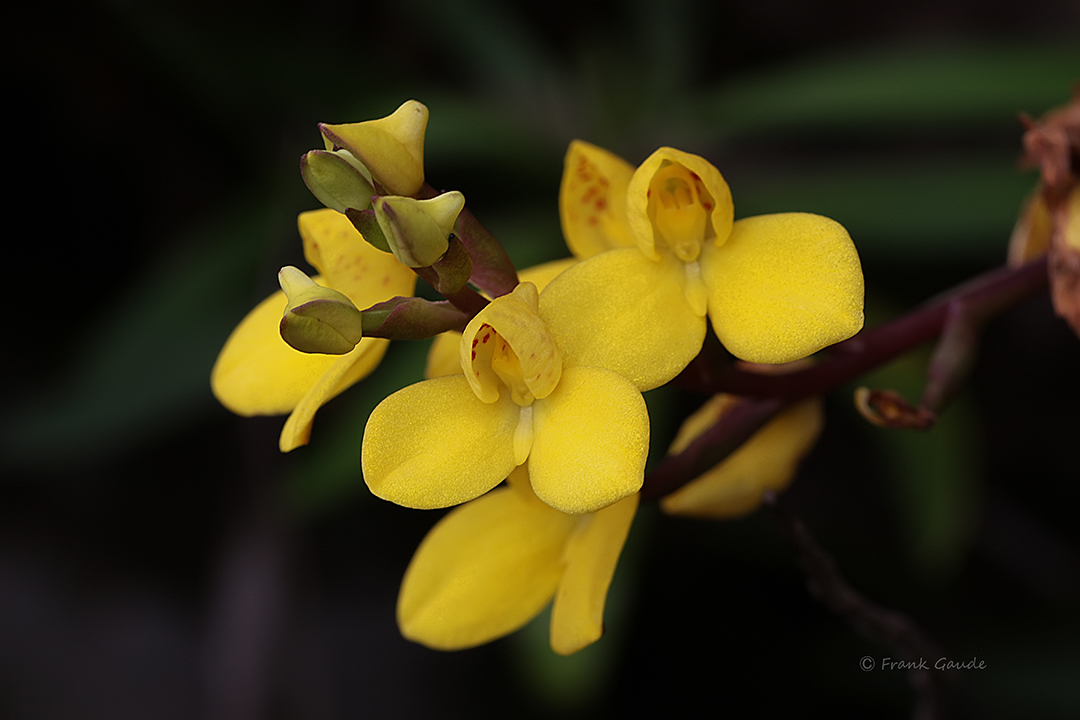
- Disa aurata
-
- Disa glandulosa
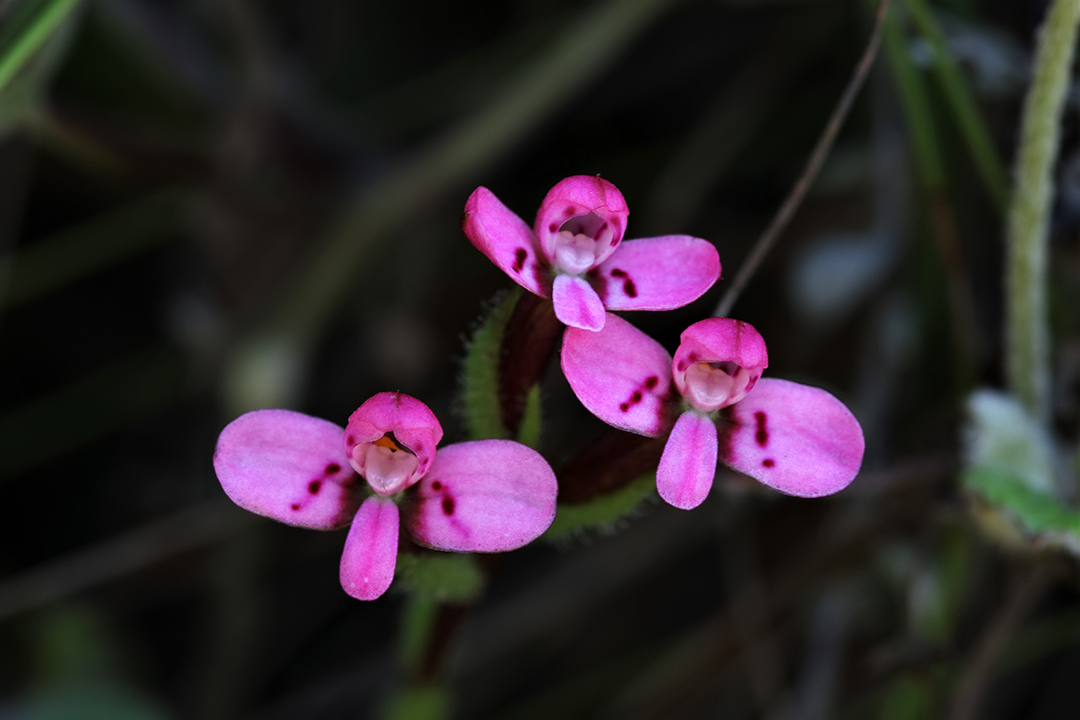
-
- Disa harveyana
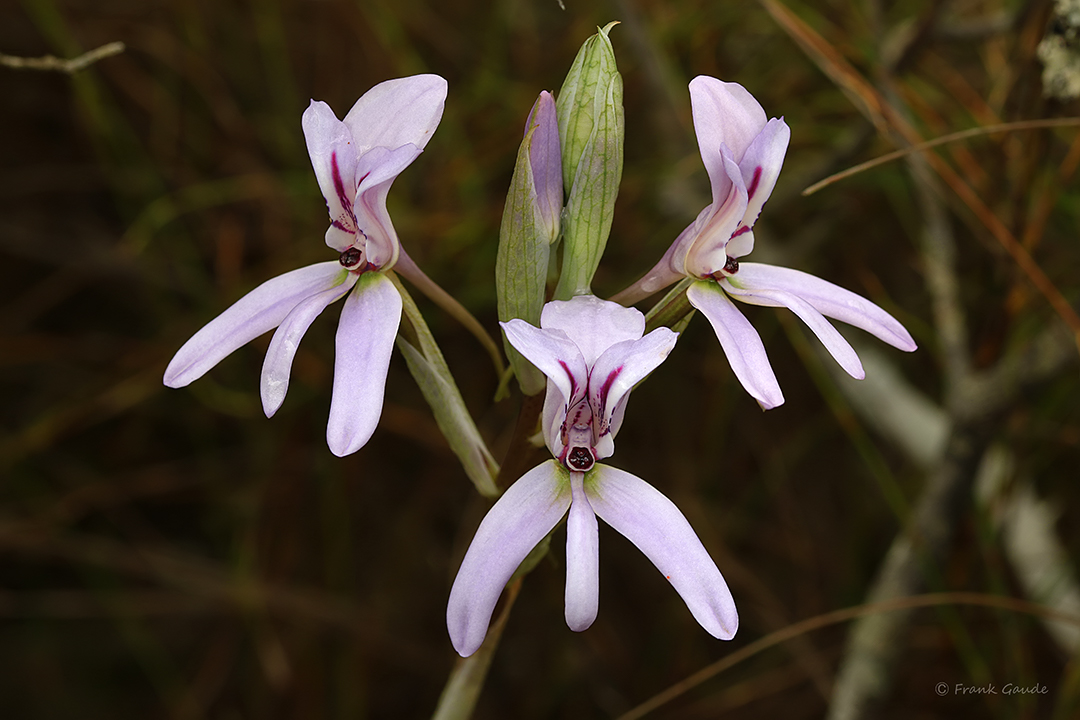
-
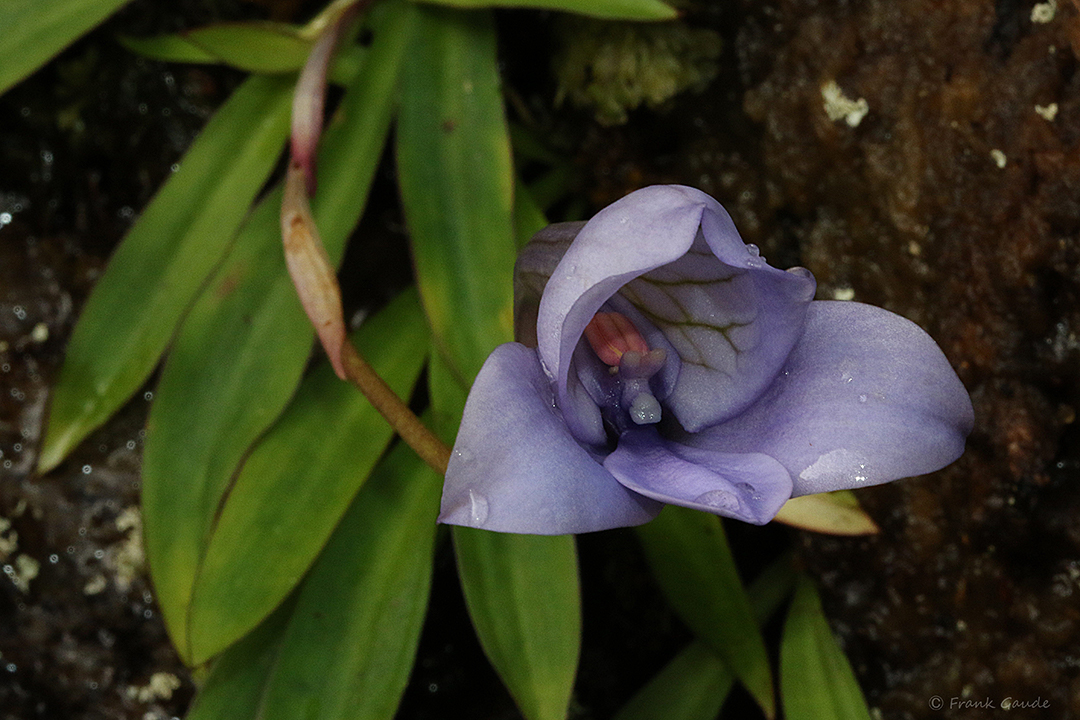
- Disa longicornu
-
- Disa multifida
-
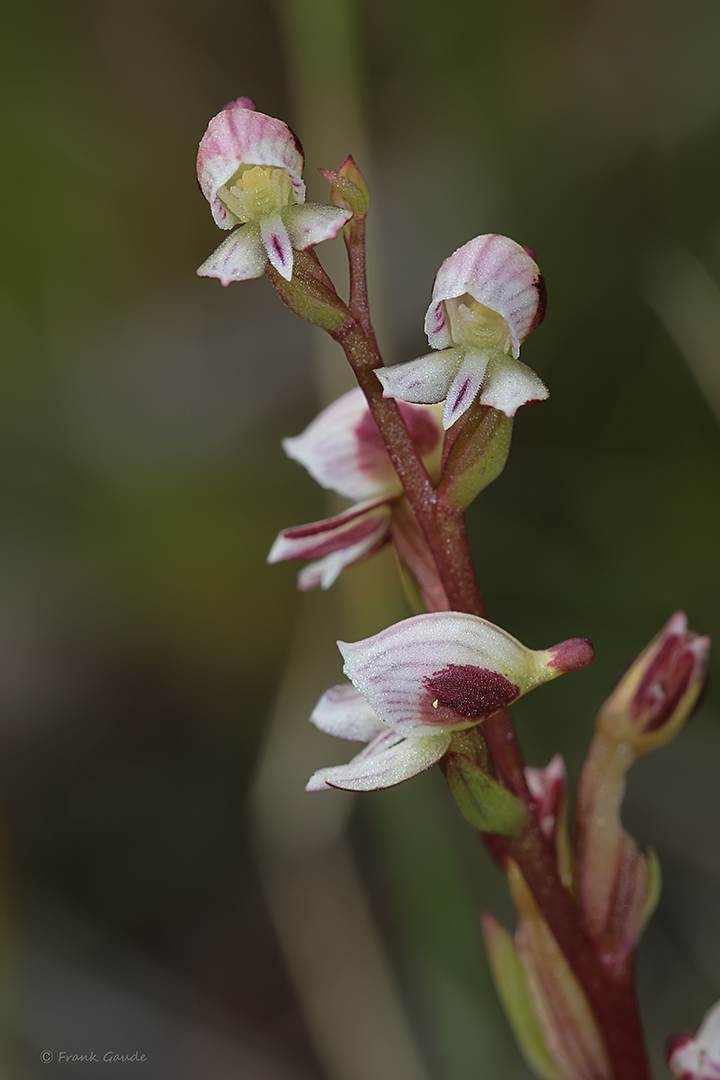
- Disa ocellata
-
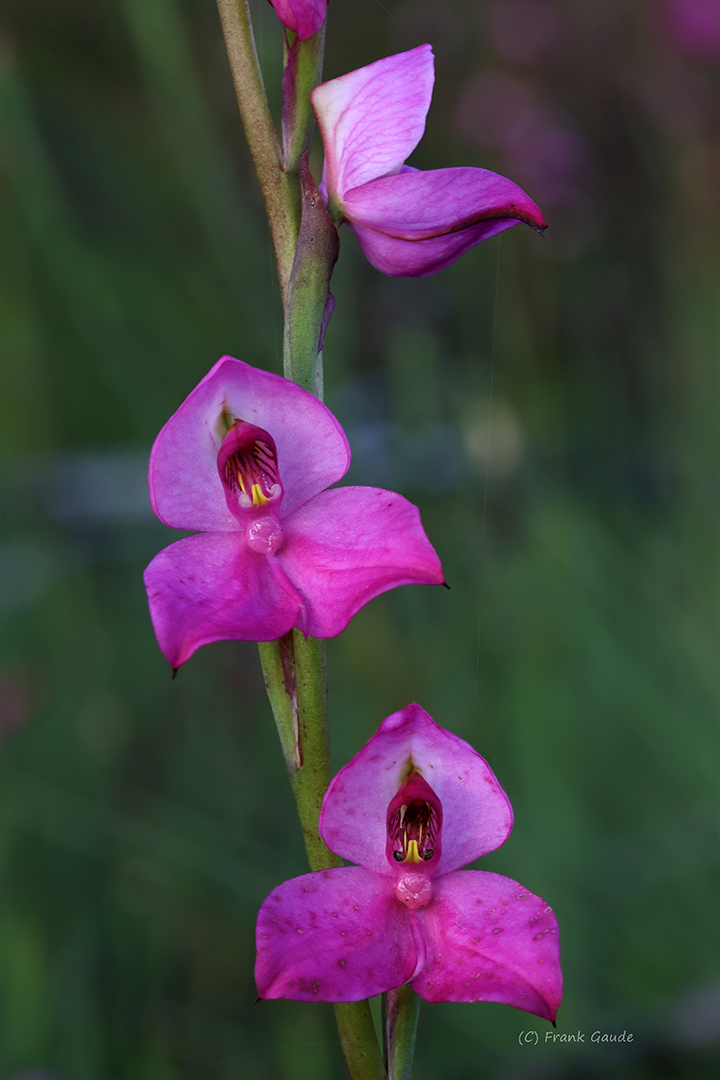
- Disa racemosa
-
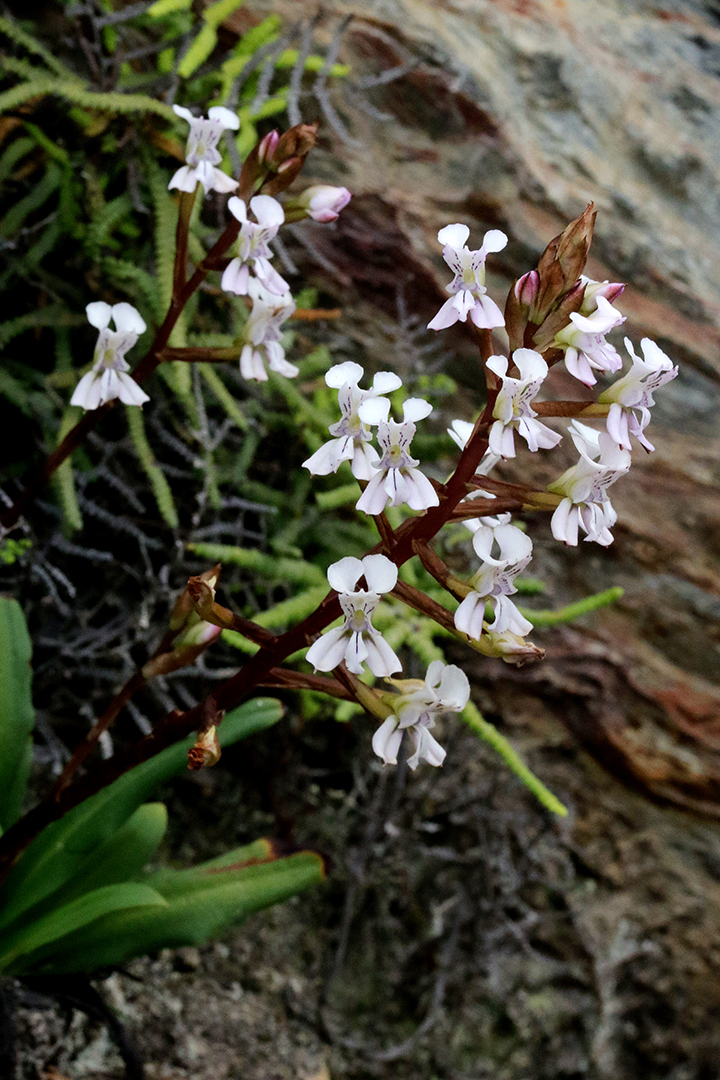
- Disa sagittalis
-
- Disa tenuifolia
-
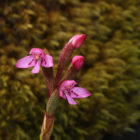
- Disa vaginata

-
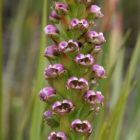
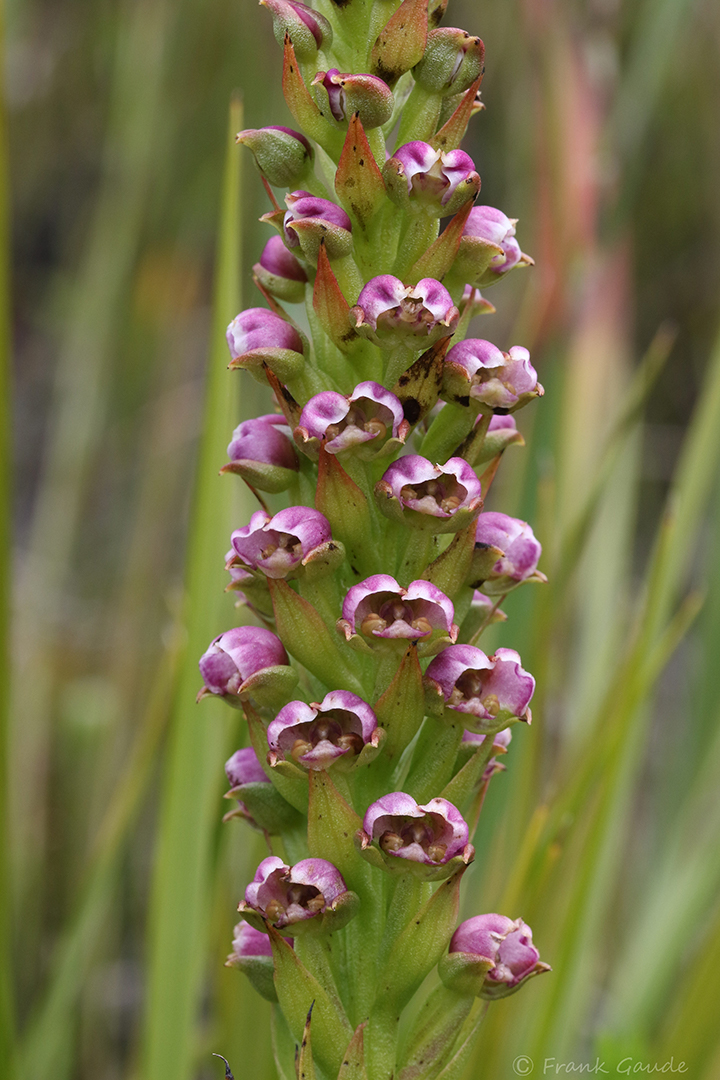
- Evotella carnosa
-
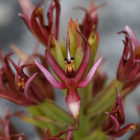
- Pachites bodkinii
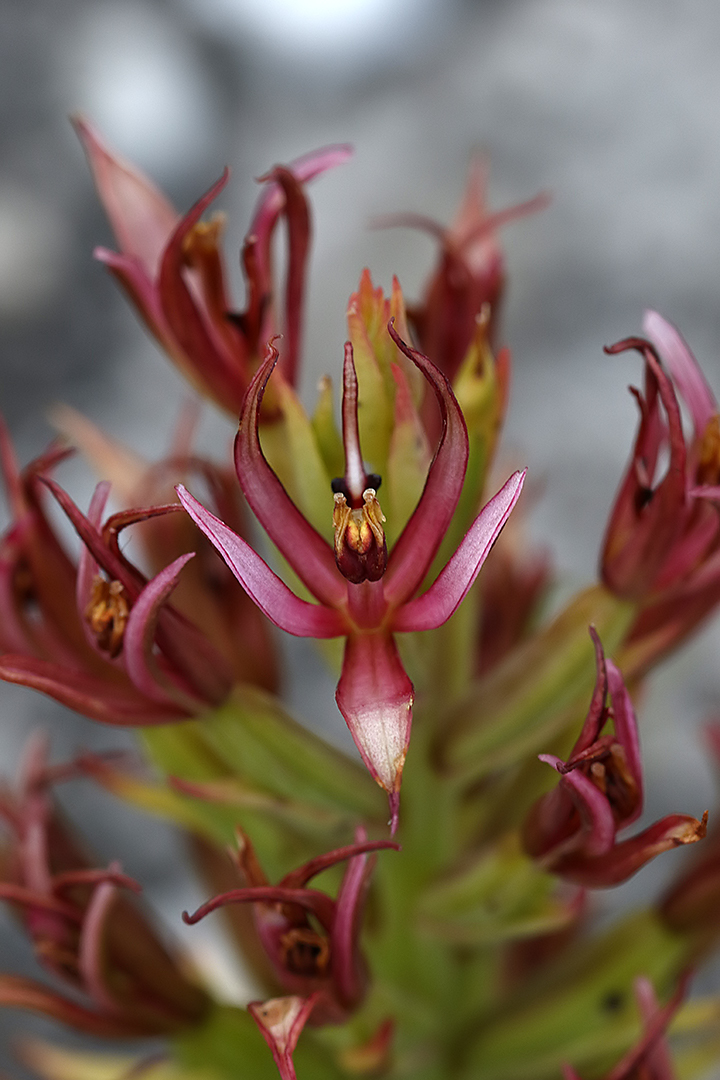
-
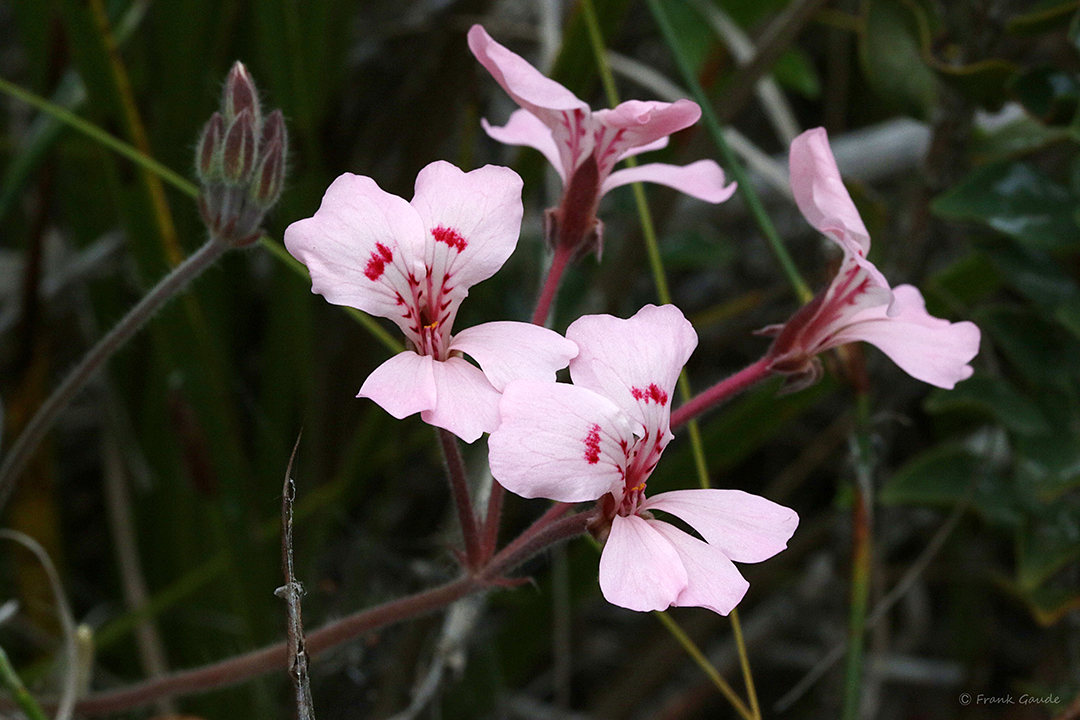
- Pelargonium cucullatum
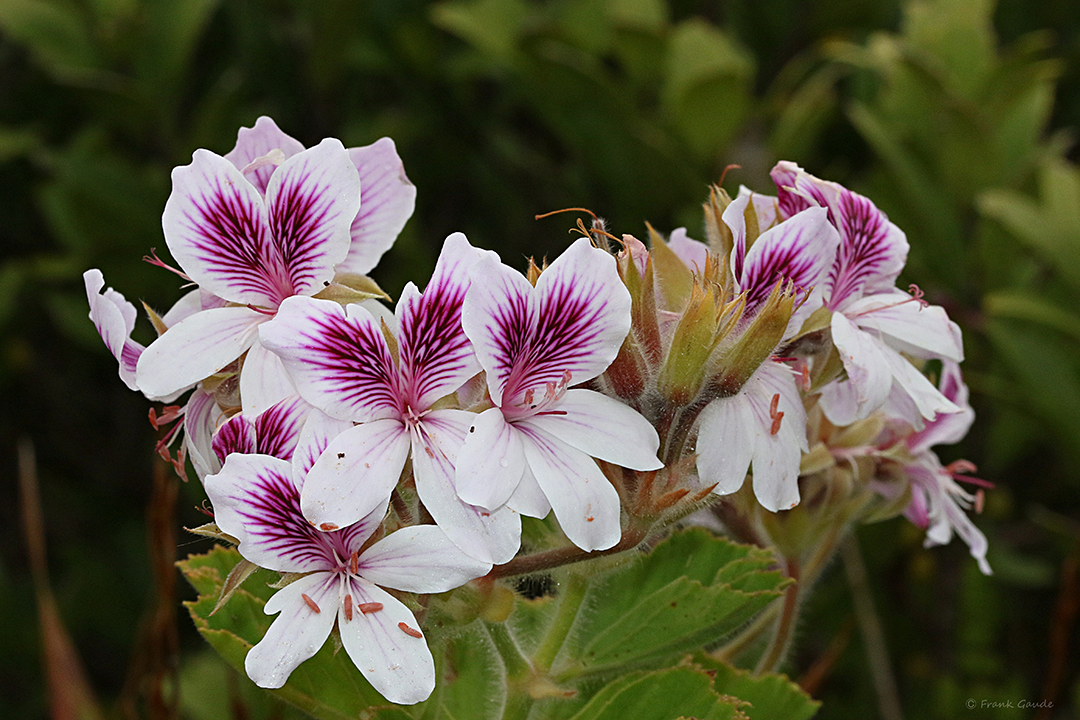
-
- Pelargonium pinnatum
-
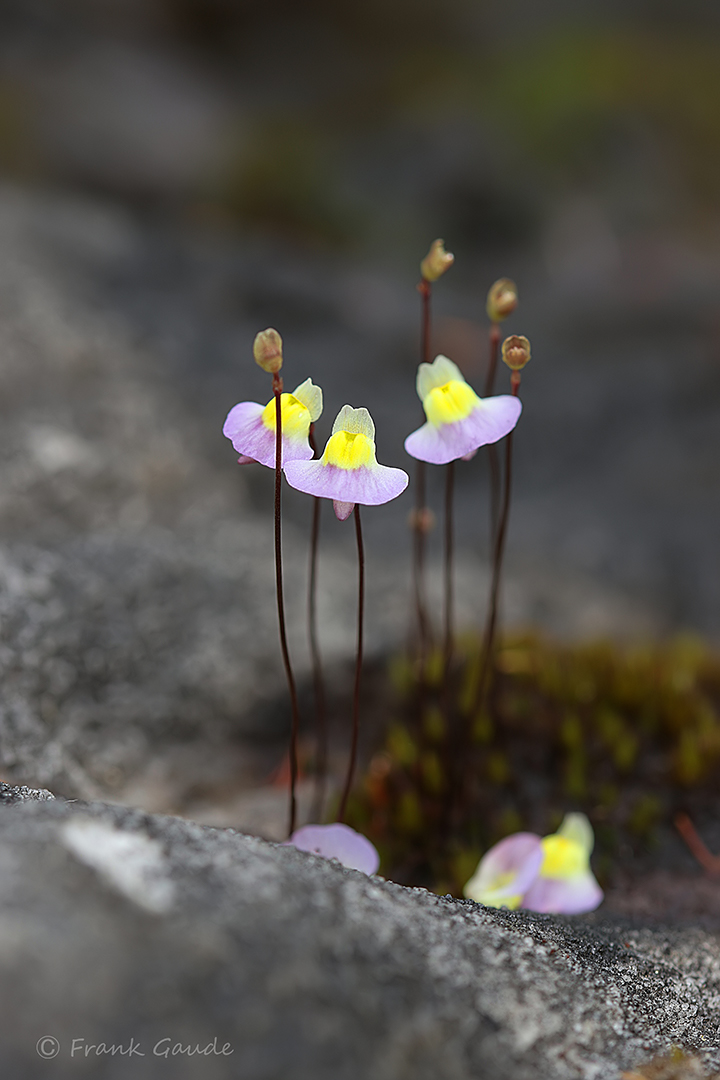
- Utricularia sp.
-
- Watsonia borbonica
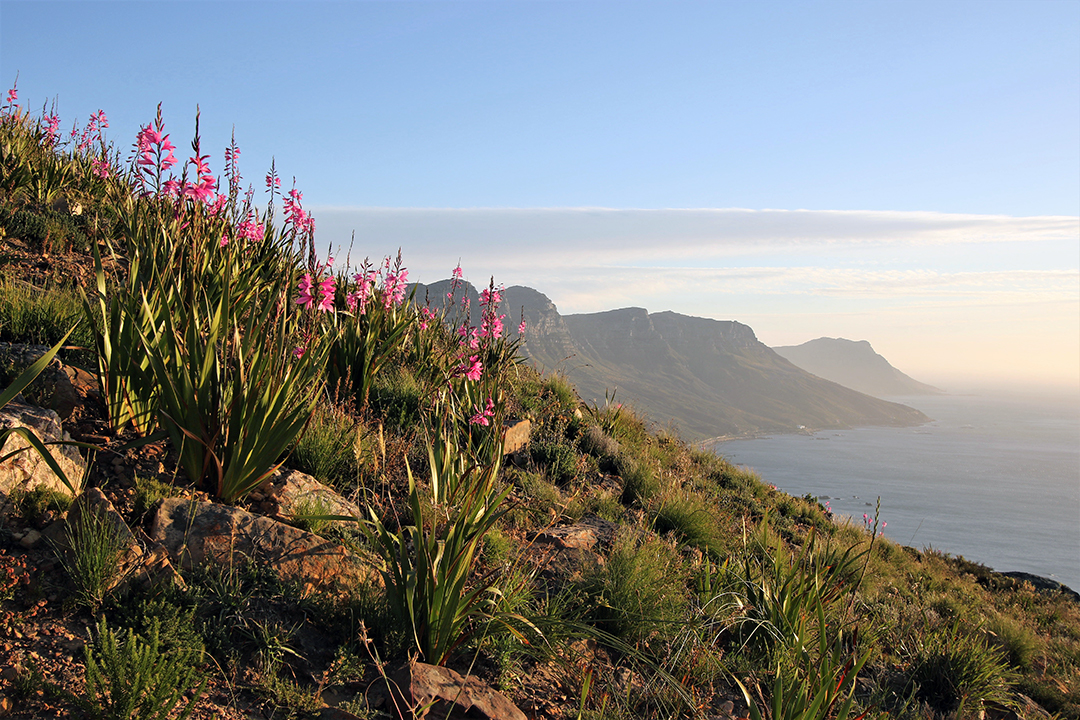
-
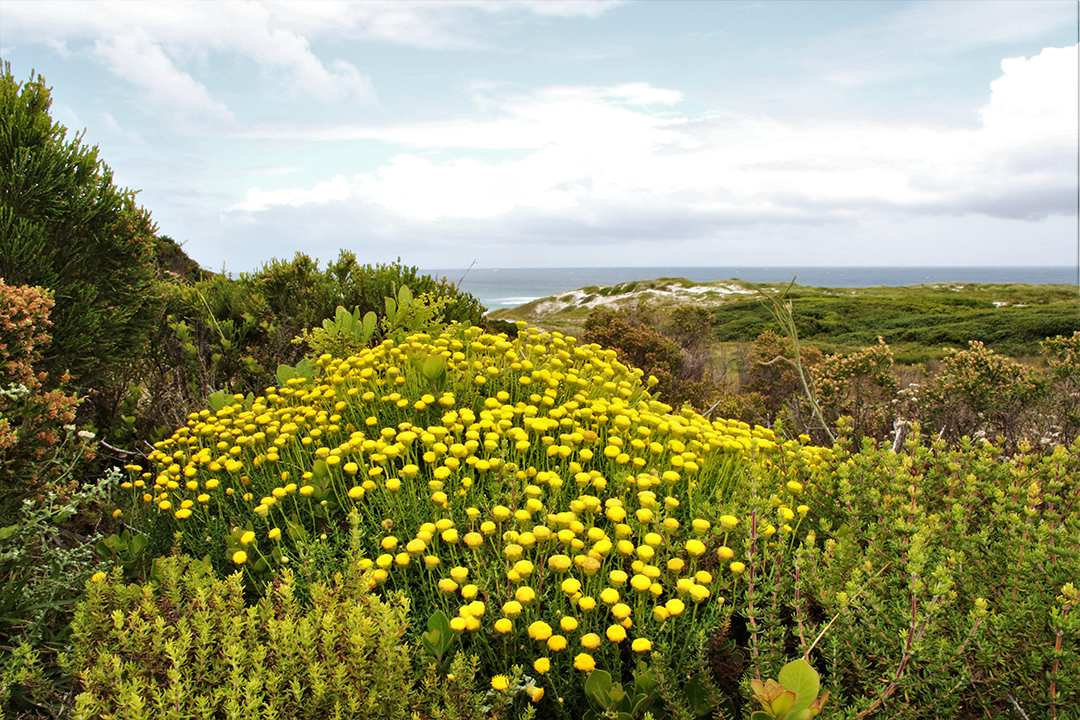
- Chrysocoma coma-aurea
-
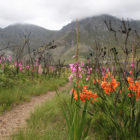
- Kogelberg after a burn
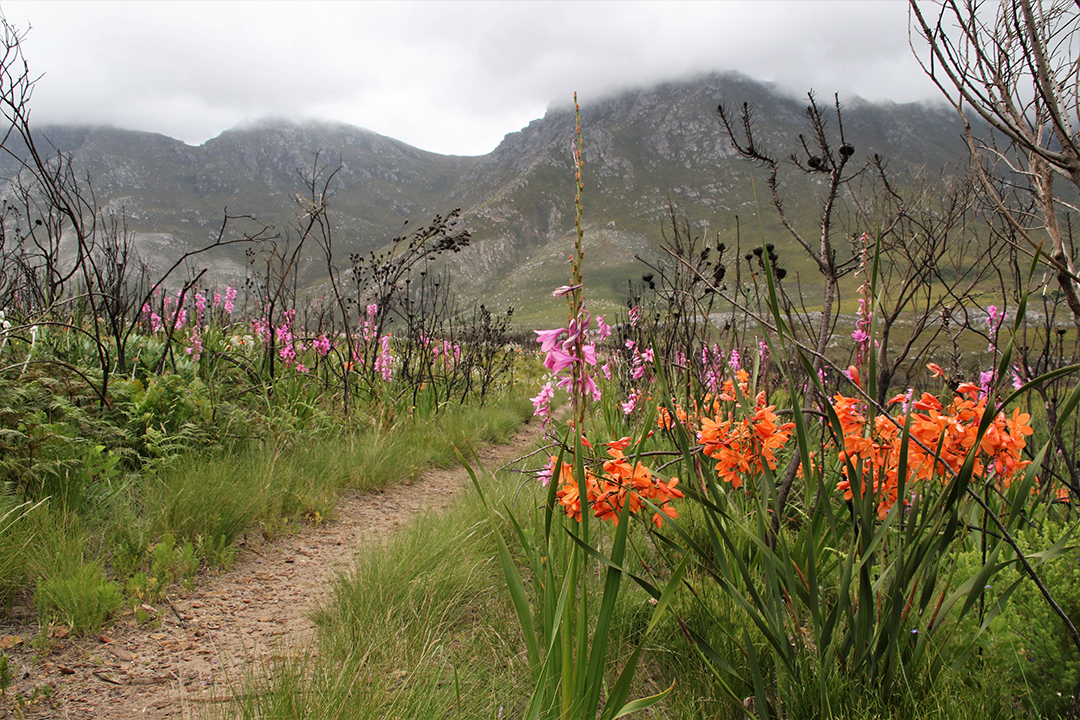
-
- Zebra

-

- Two Tails – Three Fingers, Tridactyle bicaudata bicaudata

-

- Summer Tree Orchid, Mystacidium capense

-

- Spider Orchid, Holothrix burmanniana

-

- Parrot-beaked Tortoise, Homopis areolatus

-

- Charming Disa, Disa venusta

-

- King Protea, Protea cynaroides

-

- Early Blue Disa, Disa purpurascens

-

- Beach Satyre, Satyrium hallackii hallackii

-

- Disa atricapilla

-

- Lizard Disa, Disa hians

-

- Eulophia speciosa

-

- Cape Dwarf Chameleon

-

- Disa bivalvata